My posts have been infrequent due to some life events, not because I've lost interest in posting.
I will be out of the country for two months, returning in mid-November.
I do have many posts in progress so it's not entirely unlikely that nothing will appear at all.
(Notice the double negative.)
Internet access will be sporadic, and hence my replies to posts and to emails will be delayed.
Thank you all for visiting.
Tuesday, September 20, 2011

Sunday, September 18, 2011
Alfred Hitchcock's Mystery Magazine, July 1965: The Interior Art
Alfred Hitchcock's Mystery Magazine, Vol. 10, No. 7, July 1965
For a review of the issue's stories, please visit here.
Though the covers of the AHMM issues during the 1960s and 1970s were less than unremarkable, the interior drawings are a treat. I don't know who was responsible for these, but the artist's attention to detail, interesting facial interpretations and great quirkiness is an absolute treat, helping to enhance the overall issues and the individual stories themselves. As a kid in the mid-80s I would purchase these back issues for a quarter at a local second hand book store, and before even reading the issues I would sit and look at the art, at times trying to interpret what the stories were about.
Here is a rundown of most of the art in the July 1965 issue, which I reviewed a little while ago. Bragging about paying only a quarter, some of the issues were unfortunately in poor condition, this one being among the worst since someone was unable to mentally calculate 60 + 7.50 + 2.25. But I guess those were big numbers back when this issue cost only fifty cents. (I cropped off the top of this image; though I loved the book shop as a kid, in hindsight I'm quite upset they ruined all their merchandise by ink stamping their store name and location on the first page.)
 The first full-page artwork is for the lead-in story, "The Peregrine" by Clark Howard. This image, in all its ugly brown splendour, depicts our two convicts amid the thick brush as they discover the infant bird. The drawing below, from the bottom of page 11, depicts the unsympathetic prison guard as he sits behind the line that no prisoner shall cross, unless they wish to get shot point blank. (A third image I didn't include as it contains a spoiler.)
The title image for Ed Lacy's "The Little Things" (page 17) includes a hint as to why convict Harry Morris was killed. The murder is depicted on page 20, with an accurate rendering of the shooting, including the bullet's point of impact. Lovely.


 D. S. Halacy Jr.'s "Hardheaded Cop" receives the second full-page colour rendering, with our "hero" Police Sergeant Dave Hackett slumped in his kitchen chair, beer in hand, with his lovely wife being, well, a lovely wife, with Hackett's steaming dinner in hand. My feelings about the characters are made clear in my review, but I nonetheless like the detailed aspect of the drawing, the full-sized kitchen complete with dotted floors, mountains of dishes and... hey wait! Is that a kitchen window behind the cop? And is that a door leading to a dining room that clearly continues behind the wall. I see, the kitchen window gives a nice view of the dining room. Kind of like the set of a sitcom. (Incidentally, as a kid I thought the fists on the title page were punching the cop, but only later did it dawn on me that they are rapping his head, testing for firmness.)
 For Carroll Mayers's "Man with a Hobby" we have the man in question, local Sam Hubbard, immersed in his hobby of pursuing potential bad guys. Sam is a chubby, clumsy-looking fellow, less akin to a bounty hunter than one would imagine, while the potential thug is quite thug-like, staring at the Fidelity Loan Company across the street. I love the steaming cup of coffee, the diner tablecloth, red an white despite the black and white, and the two lines beside Sam's coat button, emphasizing his pudginess.
 Richard Deming's highly enjoyable "Gentle Bluebeard" is positively enhanced by the charming drawings. While the full-page yellow garage meeting between Sergeant Sod Harris and mechanic Mosher seems an odd choice for such focus as there is nothing terribly integral to the moment, the various images of poor Arlene Mosher lounging in the hospital bed (pages 54 and 55) throughout her various misfortunes are sensitively detailed, and even charming. The story's title page is nicely rendered with the old hospital bed, it's little wheels and the medical chart hanging on its frame. The decision to place Deming's name underneath the bed is great. Perhaps it's just me, but I found a little humour in the layout of the three different hospitalization scenes. The beds are identical but the lamps are different as are her flowers. She's probably lying there wondering how she can possibly be such a klutz. Poor Arlene Mosher.


 The disappointing "Loaded Guns Are Dangerous" by Richard O. Lewis has some amusing art. The author's name on the title page is not a series of bullet hole, but the dots help to represent George's valuable coin collection. Gullible Martha appears in all her fine, loud-mouthed glory, and the inset of one of the bad guys is great.

 "A Very Cold Gimlet" features a very busy title. "A Very Cold" hovers over a nicely frosted glass filled with "Gimlet," while Frank Sisk's name sits in the glass's shadow. In the inset to the right we have the very cold, sharply drawn Janice Sanford, beside a friendly enough looking bit character. Janice appears icily laughing on the phone while our "hero" Osgood Chase is fuming beside her, each armed with a gimlet. While I like Janice's sharp curls, the tough guy look of Chase somehow doesn't match the man I had in mind.


 My favourite art for any story belongs to Gloria Ericson's "See No Evil." The monkey faces in the title page are more comical than creepy, while the lettering is a little juvenile, particularly the drooping "EVIL." On the other hand, the depiction of pet shop owner is excellent, as he looks partly like an ape, and somewhat like a mouse. His character is consistent in both images. On the right he is shocked at Miss Decker collapsing, while the monkey stares, appropriately with an excellent bird's eye view, his little doll leaning against his cage. We see Miss Decker's belongings scattered across the floor, including her cash and her house key. The image below, with the ape-like Benjy finding Miss Decker's loot, includes some amusing wall photos of her beloved dog, which is a great detail.
 The title to Arthur Porges's "The Perfect Wife" is wonderful, as the somewhat comical story has a very comical rendering of the strangling of one of the "little old biddies" that our so-called hero dislikes so much. There is also a small inset of our dashing narrator which I do not include. This drawing is a small filler, adding little to anything, and not quite rendering the killer as I would expect to see him.

 "The Five-Minute Millionaire" is granted one of the full-page colour images, this one in ugly brown, though a lighter brown than that used for "The Peregrine." The title page shows a woman pulling the minute hand of a clock (the author's name is in the facing page), while the full page depicts the murder. The title page seems a little messy, and it took me five minutes to figure out what the lady in the sheer gown was doing (looks almost like she's holding an umbrella). As for the title page I love the over-sized mallet thing, especially in contrast to the victim's tiny flashlight. I also like that the artist includes the victim's shadow, only it contradicts the tiny flashlight, giving the impression that the room is fully lit.
 Wenzell Brown's short piece "Gallivantin' Woman" has only a title page, which features Miss Susie Sloane happily gallivantin'. An amusing, exaggerated rendition of the annoying little woman.
 The title for "The Kidnappers" features trembling lettering alongside a trembling kidnapped boy and a calmer woman. The facing page has either criminal or payee with the loot bag rushing by a lamp post and over the author's name. The yellow page below has the gluttonous Mr. Kapon worrying over son Timothy while holding up the ransom note, while the seductress secretary is vying for the businessman's attentions. Details include a bundle of letters on Kapon's desk (his laptop must be in the drawer) and a pretty heart-shaped locket on the succubus, I mean secretary's right wrist.

 The double-paged title to "Welcome Stranger" is nicely detailed. The story's lettering is on a large highway billboard which has become the archetypical hiding place for a highway patrol car seeking speedsters, while Elijah Ellis's name appears in a small picket sign. We have our crooked sheriff lounging with his cigarette, while his intended victims are driving by. Look closely around the billboard and you'll notice some signs, like the 20 mph speed limit, details that are mentioned in the story.
 Finally, our novelette for the month, Richard Hardwick's "Slow Motion Murder," gives us a watery title and the final full-page colour illustration. The illustration, in a bold green, depicts the scene of the crime. This one too is nicely detailed. I suspect the illustrator read each of these stories, considered their potential and carefully selected each scene to depict. Moreover, s/he does a great job at illustrating the story titles, even though the lettering reminds me at times of my childhood attempts at drawing, back when I drew regularly under the misguided suspicion that I had such talents.
For a review of the issue's stories, please visit here.
Though the covers of the AHMM issues during the 1960s and 1970s were less than unremarkable, the interior drawings are a treat. I don't know who was responsible for these, but the artist's attention to detail, interesting facial interpretations and great quirkiness is an absolute treat, helping to enhance the overall issues and the individual stories themselves. As a kid in the mid-80s I would purchase these back issues for a quarter at a local second hand book store, and before even reading the issues I would sit and look at the art, at times trying to interpret what the stories were about.
Here is a rundown of most of the art in the July 1965 issue, which I reviewed a little while ago.
 Bragging about paying only a quarter, some of the issues were unfortunately in poor condition, this one being among the worst since someone was unable to mentally calculate 60 + 7.50 + 2.25. But I guess those were big numbers back when this issue cost only fifty cents. (I cropped off the top of this image; though I loved the book shop as a kid, in hindsight I'm quite upset they ruined all their merchandise by ink stamping their store name and location on the first page.)
 The first full-page artwork is for the lead-in story, "The Peregrine" by Clark Howard. This image, in all its ugly brown splendour, depicts our two convicts amid the thick brush as they discover the infant bird. The drawing below, from the bottom of page 11, depicts the unsympathetic prison guard as he sits behind the line that no prisoner shall cross, unless they wish to get shot point blank. (A third image I didn't include as it contains a spoiler.)
The title image for Ed Lacy's "The Little Things" (page 17) includes a hint as to why convict Harry Morris was killed. The murder is depicted on page 20, with an accurate rendering of the shooting, including the bullet's point of impact. Lovely.


 D. S. Halacy Jr.'s "Hardheaded Cop" receives the second full-page colour rendering, with our "hero" Police Sergeant Dave Hackett slumped in his kitchen chair, beer in hand, with his lovely wife being, well, a lovely wife, with Hackett's steaming dinner in hand. My feelings about the characters are made clear in my review, but I nonetheless like the detailed aspect of the drawing, the full-sized kitchen complete with dotted floors, mountains of dishes and... hey wait! Is that a kitchen window behind the cop? And is that a door leading to a dining room that clearly continues behind the wall. I see, the kitchen window gives a nice view of the dining room. Kind of like the set of a sitcom. (Incidentally, as a kid I thought the fists on the title page were punching the cop, but only later did it dawn on me that they are rapping his head, testing for firmness.)
 For Carroll Mayers's "Man with a Hobby" we have the man in question, local Sam Hubbard, immersed in his hobby of pursuing potential bad guys. Sam is a chubby, clumsy-looking fellow, less akin to a bounty hunter than one would imagine, while the potential thug is quite thug-like, staring at the Fidelity Loan Company across the street. I love the steaming cup of coffee, the diner tablecloth, red an white despite the black and white, and the two lines beside Sam's coat button, emphasizing his pudginess.
 Richard Deming's highly enjoyable "Gentle Bluebeard" is positively enhanced by the charming drawings. While the full-page yellow garage meeting between Sergeant Sod Harris and mechanic Mosher seems an odd choice for such focus as there is nothing terribly integral to the moment, the various images of poor Arlene Mosher lounging in the hospital bed (pages 54 and 55) throughout her various misfortunes are sensitively detailed, and even charming. The story's title page is nicely rendered with the old hospital bed, it's little wheels and the medical chart hanging on its frame. The decision to place Deming's name underneath the bed is great. Perhaps it's just me, but I found a little humour in the layout of the three different hospitalization scenes. The beds are identical but the lamps are different as are her flowers. She's probably lying there wondering how she can possibly be such a klutz. Poor Arlene Mosher.

 The disappointing "Loaded Guns Are Dangerous" by Richard O. Lewis has some amusing art. The author's name on the title page is not a series of bullet hole, but the dots help to represent George's valuable coin collection. Gullible Martha appears in all her fine, loud-mouthed glory, and the inset of one of the bad guys is great.

 "A Very Cold Gimlet" features a very busy title. "A Very Cold" hovers over a nicely frosted glass filled with "Gimlet," while Frank Sisk's name sits in the glass's shadow. In the inset to the right we have the very cold, sharply drawn Janice Sanford, beside a friendly enough looking bit character. Janice appears icily laughing on the phone while our "hero" Osgood Chase is fuming beside her, each armed with a gimlet. While I like Janice's sharp curls, the tough guy look of Chase somehow doesn't match the man I had in mind.

 My favourite art for any story belongs to Gloria Ericson's "See No Evil." The monkey faces in the title page are more comical than creepy, while the lettering is a little juvenile, particularly the drooping "EVIL." On the other hand, the depiction of pet shop owner is excellent, as he looks partly like an ape, and somewhat like a mouse. His character is consistent in both images. On the right he is shocked at Miss Decker collapsing, while the monkey stares, appropriately with an excellent bird's eye view, his little doll leaning against his cage. We see Miss Decker's belongings scattered across the floor, including her cash and her house key. The image below, with the ape-like Benjy finding Miss Decker's loot, includes some amusing wall photos of her beloved dog, which is a great detail.
 The title to Arthur Porges's "The Perfect Wife" is wonderful, as the somewhat comical story has a very comical rendering of the strangling of one of the "little old biddies" that our so-called hero dislikes so much. There is also a small inset of our dashing narrator which I do not include. This drawing is a small filler, adding little to anything, and not quite rendering the killer as I would expect to see him.

 "The Five-Minute Millionaire" is granted one of the full-page colour images, this one in ugly brown, though a lighter brown than that used for "The Peregrine." The title page shows a woman pulling the minute hand of a clock (the author's name is in the facing page), while the full page depicts the murder. The title page seems a little messy, and it took me five minutes to figure out what the lady in the sheer gown was doing (looks almost like she's holding an umbrella). As for the title page I love the over-sized mallet thing, especially in contrast to the victim's tiny flashlight. I also like that the artist includes the victim's shadow, only it contradicts the tiny flashlight, giving the impression that the room is fully lit.
 Wenzell Brown's short piece "Gallivantin' Woman" has only a title page, which features Miss Susie Sloane happily gallivantin'. An amusing, exaggerated rendition of the annoying little woman.
 The title for "The Kidnappers" features trembling lettering alongside a trembling kidnapped boy and a calmer woman. The facing page has either criminal or payee with the loot bag rushing by a lamp post and over the author's name. The yellow page below has the gluttonous Mr. Kapon worrying over son Timothy while holding up the ransom note, while the seductress secretary is vying for the businessman's attentions. Details include a bundle of letters on Kapon's desk (his laptop must be in the drawer) and a pretty heart-shaped locket on the succubus, I mean secretary's right wrist.
 The double-paged title to "Welcome Stranger" is nicely detailed. The story's lettering is on a large highway billboard which has become the archetypical hiding place for a highway patrol car seeking speedsters, while Elijah Ellis's name appears in a small picket sign. We have our crooked sheriff lounging with his cigarette, while his intended victims are driving by. Look closely around the billboard and you'll notice some signs, like the 20 mph speed limit, details that are mentioned in the story.
 Finally, our novelette for the month, Richard Hardwick's "Slow Motion Murder," gives us a watery title and the final full-page colour illustration. The illustration, in a bold green, depicts the scene of the crime. This one too is nicely detailed. I suspect the illustrator read each of these stories, considered their potential and carefully selected each scene to depict. Moreover, s/he does a great job at illustrating the story titles, even though the lettering reminds me at times of my childhood attempts at drawing, back when I drew regularly under the misguided suspicion that I had such talents.
Thursday, August 25, 2011
Dark Moon Digest #3 (April 2011)
Dark Moon Digest, Issue 3, April 2011. 125 pp.
Edited by Stan Swanson
Published by Dark Moon Books, an imprint of Stony Meadow Publishing
 Issue three of Dark Moon Digest has a revamped cover style, and it's a grand improvement. The logo, layout and design, and the truly creepy cover artwork, make for an attractive issue. The handsome work is credited to Whendy Muchlis Effendy.
Once again DMD features a wide array of media, including short stories, flash fiction, longer prose excerpts, graphic work, calls for submission, and sentence-long micro-fiction. As per usual I am limiting my reviews to longer prose works, though I've included some brief comments on the flash fiction.
"Cirque des Facades" by Chris Thorndycroft. 6/10
In the seedier quarter of late nineteenth century Paris, along the lower Seine, lies the abject entertainment district, that part of town where people thrive on immoral theatre, on the basest forms of amusement. The district's star is Madame Babineaux, a former prostitute who has done well for herself by imitating the recently departed scandalous figures of Parisian society. It's thanks to their recent demise that her mimicry is so accurate, since she wears their faces on a purely literal level.
Despite its obvious direction, I enjoyed the story quite a bit. Vividly and darkly detailed, this district of Paris becomes the central figure of the tale, overshadowing Babineaux as well as the plot. The amoral figures are born into their decrepit existence, and ambitions for survival and fame lead them to practice their ghoulish acts, from Babineax herself, her mysterious rival and the mortician who sells her the peeled off faces for her act. I would encourage the author to consider more such tales, and perhaps re-working this one.
Now that I've openly stated liking the story, I'm going to pick on it a little. "A few miles downriver, the muddy banks of the Seine attracted the lowest elements of Parisian society. It offered the perfect place for the circuses, freak shows and gin houses to make their living well away from the turned-up noses and frowns of the better areas of the city."
The paragraph preceding the one above is set in the very district, so when reading "A few miles downriver" we're being taken away from the district to another, and I needed to stop and re-read to realise we're at the same place, as if the river were a circular body. The author meant to say that this particular seedy district lies a few miles downriver from the posher parts of Paris. Moreover it's Paris, so perhaps kilometres would be more appropriate.
Lately I've noticed a general trend in overusing prepositions. Perhaps it's the need for accuracy or clarity or some form of self-conscious tic, but it makes for clunky, jagged reading. I would recommend the following second sentence re-write: "The district offered a perfect haven for the circuses, freak shows and gin houses to make their living well away from the turned-up noses and frowns of the city's more affluent areas." Eliminating as many of thes and other prepositional connections eases the flow. In the meantime I've replaced "place" since it's too general, and I must shake my head at "better areas" as well, since who is to say they are better. I can't claim that my version of the sentence is better, only that it's more syntactically accurate, but each reader can claim for themselves which is indeed better. For instance, the seedy part of Paris is a far better locale for the story than the affluent areas.
Speaking of abstractions, some of the descriptions left me scratching my head. "The world returned to Madame Babineaux like some dark movement beneath the murky waters of the Seine." Hmmm... I think I know what he's trying to say, but a little overkill on the Seine and I really don't know what "some dark movement" means. It's an abstraction. It returns to her as though she were half-submerged in these murky waters? Or is the world moving underwater while she is watching from the dry shore? There are other examples but I'll stop here.
Once again I did like the story, I'm hoping only to help make it better. Or if not "better," at least more concrete :)
"Death By Scrabble" by Charlie Fish. 7/10
About a year ago someone at Goodreads brought this story to my attention (it was published online at short-stories.co.uk in 2006) and I'm glad to see the story in print. The set-up is simple: a couple is playing scrabble on an uncomfortably hot day. There is tension in the relationship heightened by the sweltering temperatures. Told through the point of view of the husband who wants very much to win and very much to get rid of his wife, he soon learns that the letters spelled out on the board immediately manifest themselves in reality. He spells EXPLODES and the air conditioner blows up, and when he spells FLY a buzzing insect appears. Realizing the power of the scrabble letter tiles, he attempts to discover a way to get rid of his wife.
This is a simple yet fun story that works because of its sense of humour and the excellent pacing, and also because it's quite short so we don't get tired of the gimmick. "It's hot and I hate my wife," it opens, setting us up and hooking us in with only a few words.
(It also reminds me of the truly brilliant Richard Condie NFB film The Big Snit, a short film I am always pleased to be reminded of.)
"Blood on the Strip" by Axel Howerton. 3/10
An elderly cowboy stumbles into an old-style coffee shop off the strip in Las Vegas and tells the assembled crowd, and the reader, of the craziness he's just witnessed. His tale involves a magician, a mysterious shaman, a pair of white tigers... and meanwhile emergency sirens outside are consistently blaring by. The story is interesting and there is a fair amount of suspense, until the zombies appear and the needless violence takes over. Once we realize what's going on, we have to sit through a tired zombie attack, which is unfortunate, especially since we're only half-way through the story.
The author's bio was more entertaining.
"The Monster on Myers Avenue" by Greg Mollin. 6/10
Edgar "Dumpster" Dunston is cycling through his old school grounds the summer before junior high, when he's attacked by bully Charley Specter, who, unlike his name, is less than ghostlike. Charley wants to remind Edgar that he is supposed to break into the seemingly empty home of the reclusive elderly Mrs. Melody Oakenfold and to remove the treasures Charley is convinced are stashed away in the house. Earlier, in a brief prologue, we have learned that Mrs. Oakenfold is dead, and that there is a demonic presence in her house.
Then some stuff happens, which I won't give away. I liked this one but the prose needs to be tightened and the familiar characters and scenarios done just a little differently. What I like is that our (anti)hero Edgar is walking the tightrope of moral development, while we wonder which end he will fall into. Edgar is the son of a drunken and abusive man, and is a social outcast because of his imperfect speech and unfortunate hygiene issues. Moreover, he is depressed because the only person who did not avoid him, little Jenny Forester, was recently killed in a hit-and-run. We sympathize with the poor kid, yet don't fully trust his pre-developed sense of good and evil. Remember, Edgar in King Lear was the good son (not to be confused with his jealous and scheming illegitimate brother Edmund), so we have hope, but how can someone with so few prospects turn out good, especially when about to face a (literal) demon from hell?
Spoiler. Well, this demon (named Leonard) is trapped in time and place and in order to get back to his realm needs a human victim, and Edgar must choose whether or not to lead Charley simultaneously to hell and out of his life. This is where the story falls apart for me. The choice is Edgar's, and a serious one it is as it will affect the course of his moral development, yet the demon Leonard seals the decision by essentially choosing for Edgar, telling him if he won't supply a victim, then he himself will be the victim. The story would have been far more effective if Edgar heads toward Charley, considering his options, and only when seeing the bully makes the decision for himself. The last line would also make more sense as it is part of his downward moral progression. (Then we can wonder what junior high with Edgar would be like.)
Finally, there is another problem in that Leonard, an almost non-stereotypical demon, tells Edgar that once he has a victim he will leave this realm, yet at the end is still in the house. I prefer the idea that the demon is eternally trapped (or at the least trapped long-term) with the subtle implication that Edgar must feed it from time to time. This will add emphasis to the end, as well as to the title.
"Voices Carry" by Tom Wortmann. 7/10
In 1944 a team of allied foot soldiers are canvassing southern Poland searching for the remaining concentration camps, scouting the land ahead of the tank troupes. The story, told through vignettes from the points of view of several different and varied characters, tells of their long march and of the frightening discovery at an abandoned camp.
Wortmann's story received the Dark Moon Digest prize for best entry in its recent vampire short story contest, and though I haven't yet read issue four of DMD, I am ready to award it the figurative prize for best short story to have appeared in the magazine's first year. The best thing about "Voices Carry" is that it is well written, competently focusing on character and using its smaller details effectively. Whatever this story was going to be about, whatever sub-genre it would introduce, I didn't care since I was hooked early on and read it quickly through.
To be honest, I am a prejudiced reader, and don't care for vampire stories (I've been disappointed too often, and the mythology has the tendency to become silly and self-conscious), but even knowing this piece was vampire-related, the writing and story progression managed to take hold my prejudice and slap me with it. Well done, Mr. Wortmann. The thing is, it's not really about vampires; the undead here illustrate the severing from life of those who have been severed from both their homes and from the comforts of home through the horrors of war. Far more frightening than a bite on the neck.
The only problem I have with the story (which is why I graded it 7/10 rather than a deserved 8), is that the final vignette is a weak and unnecessary finish. The previous vignette's image and last line is far more powerful, and leaving the reader with that final, frightening image would have been exemplary.
"Tenants, Part Two" by Kevin McClintock. 7/10
As we follow Angela's exploits in trying to get to her daughter, we must survive a detailed car chase and a confrontation with a cop with a history. What makes "Tenants" work is not the plot itself, which is essentially an extended chase with promise, nor the writing per se, since despite it being told through the point of view of a woman it is clearly being written by a man, but the pacing and energy. McClintock infuses his tale with some truly energetic writing, so that the seemingly unending car chase is never dull, and the eventual violence does not feel overdone.
The cliffhanger here doesn't work too well, since we know there are two parts remaining and hence Angela cannot die, at least not yet.
"Rub Me the Wrong Way" by Heather Durkin. 6/10
Massage therapist Abby's first client of the day proves to be challenging, since she turns out to be a zombie. Abby works for a clinic that does not exclude or prejudice, so vampires, shifters and zombies are all welcome. The problem is that zombies are known to occasionally go ballistic and try to munch on the brains of the living.
There is no real story-line here, but that's what makes this an entertaining read. a massage therapist herself, author Durkin does well in pacing the narrative, told through Abby's point of view, around her skills while informing the reader of the various complications with massaging zombies. Well written despite the misuse of lay/lie, was/were, and other minor bumps along the sentences.
"Kindread" by Richard Moore. 6/10
Poor inbred child Lyle. As he's trying to carve up a pretty young girl, his mother crawls back home to interrupt his plans. The whole business is shocking, especially since it's been two weeks since he's killed his ma, and the best part, why she's crawling, is she doesn't have any legs. Well, not exactly, since they're out front running around. It turns out the swamp water Lyle dumped his mother's body into, after having cut her in two, has the ability to fuse different organisms together, a process that I suppose also revives the dead. The final sequence is reminiscent of John Carpenter's excellent The Thing.
I enjoyed this story more than I thought I would, since I'm not too fond of comedy horror. It wasn't exactly funny, but it was entertaining. I just wonder what the author could have done if he treated this idea seriously. Sure it's outlandish, but outlandish story ideas don't necessarily need to be relegated to horror's least effective sub-genres.
"All Consuming Hunger of Love" by Araminta Star Matthews. 6/10
Margaret Cron's husband Robert was just killed in a car accident, leaving the woman in a near paralyzing state of grief. Following years of co-dependency, former librarian Margaret is losing her grasp on reality, and is determined to get her Robert back. The story flows fairly well and the plot is well developed with an unpredictable denouement. It has some pacing problems though, mainly in that it's overly long, especially the closer we near the end. Shortening some sequences and tightening some elements would help the story considerably, and the strong plot elements deserve this.
A fairly polished story, there are nonetheless some unfortunate oversights, the most embarrassing being that the prestigious Paris university Sorbonne is referred to as the Sarbonne.
"The Smell of Death" by Graham Williams. 4/10
Three members of a (probably metal) band and their (probable) groupie Jessy are stuck in a food-depleted house during a zombie uprising. Our intelligence-deficient quad have run out of zombie repellent, and attempt to concoct a lotion that would allow them to pass through the neighbourhood hordes and get to the nearest club for a bite and maybe a brew. As I've stated, horror comedy does not digest well with me, and I hurried through this one.
Flash fiction:
"The End" (or "Finis") by Graham Williams. 5/10
A straightforward piece of a pair of collaborators completing their sure-fire money-making masterpiece. It would work better if it were flashier (as in shorter), though I like the play with the title.
"The Fourth Girl" by Grier Jewell. 7/10
Three girls are cloud-watching, but there is that fourth girl whose name no one can remember. This one managed to impress me, especially with the nice and creepy surrealist quality. Three girls are cloud-watching, but there is that fourth girl...
Edited by Stan Swanson
Published by Dark Moon Books, an imprint of Stony Meadow Publishing
 Issue three of Dark Moon Digest has a revamped cover style, and it's a grand improvement. The logo, layout and design, and the truly creepy cover artwork, make for an attractive issue. The handsome work is credited to Whendy Muchlis Effendy.
Once again DMD features a wide array of media, including short stories, flash fiction, longer prose excerpts, graphic work, calls for submission, and sentence-long micro-fiction. As per usual I am limiting my reviews to longer prose works, though I've included some brief comments on the flash fiction.
"Cirque des Facades" by Chris Thorndycroft. 6/10
In the seedier quarter of late nineteenth century Paris, along the lower Seine, lies the abject entertainment district, that part of town where people thrive on immoral theatre, on the basest forms of amusement. The district's star is Madame Babineaux, a former prostitute who has done well for herself by imitating the recently departed scandalous figures of Parisian society. It's thanks to their recent demise that her mimicry is so accurate, since she wears their faces on a purely literal level.
Despite its obvious direction, I enjoyed the story quite a bit. Vividly and darkly detailed, this district of Paris becomes the central figure of the tale, overshadowing Babineaux as well as the plot. The amoral figures are born into their decrepit existence, and ambitions for survival and fame lead them to practice their ghoulish acts, from Babineax herself, her mysterious rival and the mortician who sells her the peeled off faces for her act. I would encourage the author to consider more such tales, and perhaps re-working this one.
Now that I've openly stated liking the story, I'm going to pick on it a little. "A few miles downriver, the muddy banks of the Seine attracted the lowest elements of Parisian society. It offered the perfect place for the circuses, freak shows and gin houses to make their living well away from the turned-up noses and frowns of the better areas of the city."
The paragraph preceding the one above is set in the very district, so when reading "A few miles downriver" we're being taken away from the district to another, and I needed to stop and re-read to realise we're at the same place, as if the river were a circular body. The author meant to say that this particular seedy district lies a few miles downriver from the posher parts of Paris. Moreover it's Paris, so perhaps kilometres would be more appropriate.
Lately I've noticed a general trend in overusing prepositions. Perhaps it's the need for accuracy or clarity or some form of self-conscious tic, but it makes for clunky, jagged reading. I would recommend the following second sentence re-write: "The district offered a perfect haven for the circuses, freak shows and gin houses to make their living well away from the turned-up noses and frowns of the city's more affluent areas." Eliminating as many of thes and other prepositional connections eases the flow. In the meantime I've replaced "place" since it's too general, and I must shake my head at "better areas" as well, since who is to say they are better. I can't claim that my version of the sentence is better, only that it's more syntactically accurate, but each reader can claim for themselves which is indeed better. For instance, the seedy part of Paris is a far better locale for the story than the affluent areas.
Speaking of abstractions, some of the descriptions left me scratching my head. "The world returned to Madame Babineaux like some dark movement beneath the murky waters of the Seine." Hmmm... I think I know what he's trying to say, but a little overkill on the Seine and I really don't know what "some dark movement" means. It's an abstraction. It returns to her as though she were half-submerged in these murky waters? Or is the world moving underwater while she is watching from the dry shore? There are other examples but I'll stop here.
Once again I did like the story, I'm hoping only to help make it better. Or if not "better," at least more concrete :)
"Death By Scrabble" by Charlie Fish. 7/10
About a year ago someone at Goodreads brought this story to my attention (it was published online at short-stories.co.uk in 2006) and I'm glad to see the story in print. The set-up is simple: a couple is playing scrabble on an uncomfortably hot day. There is tension in the relationship heightened by the sweltering temperatures. Told through the point of view of the husband who wants very much to win and very much to get rid of his wife, he soon learns that the letters spelled out on the board immediately manifest themselves in reality. He spells EXPLODES and the air conditioner blows up, and when he spells FLY a buzzing insect appears. Realizing the power of the scrabble letter tiles, he attempts to discover a way to get rid of his wife.
This is a simple yet fun story that works because of its sense of humour and the excellent pacing, and also because it's quite short so we don't get tired of the gimmick. "It's hot and I hate my wife," it opens, setting us up and hooking us in with only a few words.
(It also reminds me of the truly brilliant Richard Condie NFB film The Big Snit, a short film I am always pleased to be reminded of.)
"Blood on the Strip" by Axel Howerton. 3/10
An elderly cowboy stumbles into an old-style coffee shop off the strip in Las Vegas and tells the assembled crowd, and the reader, of the craziness he's just witnessed. His tale involves a magician, a mysterious shaman, a pair of white tigers... and meanwhile emergency sirens outside are consistently blaring by. The story is interesting and there is a fair amount of suspense, until the zombies appear and the needless violence takes over. Once we realize what's going on, we have to sit through a tired zombie attack, which is unfortunate, especially since we're only half-way through the story.
The author's bio was more entertaining.
"The Monster on Myers Avenue" by Greg Mollin. 6/10
Edgar "Dumpster" Dunston is cycling through his old school grounds the summer before junior high, when he's attacked by bully Charley Specter, who, unlike his name, is less than ghostlike. Charley wants to remind Edgar that he is supposed to break into the seemingly empty home of the reclusive elderly Mrs. Melody Oakenfold and to remove the treasures Charley is convinced are stashed away in the house. Earlier, in a brief prologue, we have learned that Mrs. Oakenfold is dead, and that there is a demonic presence in her house.
Then some stuff happens, which I won't give away. I liked this one but the prose needs to be tightened and the familiar characters and scenarios done just a little differently. What I like is that our (anti)hero Edgar is walking the tightrope of moral development, while we wonder which end he will fall into. Edgar is the son of a drunken and abusive man, and is a social outcast because of his imperfect speech and unfortunate hygiene issues. Moreover, he is depressed because the only person who did not avoid him, little Jenny Forester, was recently killed in a hit-and-run. We sympathize with the poor kid, yet don't fully trust his pre-developed sense of good and evil. Remember, Edgar in King Lear was the good son (not to be confused with his jealous and scheming illegitimate brother Edmund), so we have hope, but how can someone with so few prospects turn out good, especially when about to face a (literal) demon from hell?
Spoiler. Well, this demon (named Leonard) is trapped in time and place and in order to get back to his realm needs a human victim, and Edgar must choose whether or not to lead Charley simultaneously to hell and out of his life. This is where the story falls apart for me. The choice is Edgar's, and a serious one it is as it will affect the course of his moral development, yet the demon Leonard seals the decision by essentially choosing for Edgar, telling him if he won't supply a victim, then he himself will be the victim. The story would have been far more effective if Edgar heads toward Charley, considering his options, and only when seeing the bully makes the decision for himself. The last line would also make more sense as it is part of his downward moral progression. (Then we can wonder what junior high with Edgar would be like.)
Finally, there is another problem in that Leonard, an almost non-stereotypical demon, tells Edgar that once he has a victim he will leave this realm, yet at the end is still in the house. I prefer the idea that the demon is eternally trapped (or at the least trapped long-term) with the subtle implication that Edgar must feed it from time to time. This will add emphasis to the end, as well as to the title.
"Voices Carry" by Tom Wortmann. 7/10
In 1944 a team of allied foot soldiers are canvassing southern Poland searching for the remaining concentration camps, scouting the land ahead of the tank troupes. The story, told through vignettes from the points of view of several different and varied characters, tells of their long march and of the frightening discovery at an abandoned camp.
Wortmann's story received the Dark Moon Digest prize for best entry in its recent vampire short story contest, and though I haven't yet read issue four of DMD, I am ready to award it the figurative prize for best short story to have appeared in the magazine's first year. The best thing about "Voices Carry" is that it is well written, competently focusing on character and using its smaller details effectively. Whatever this story was going to be about, whatever sub-genre it would introduce, I didn't care since I was hooked early on and read it quickly through.
To be honest, I am a prejudiced reader, and don't care for vampire stories (I've been disappointed too often, and the mythology has the tendency to become silly and self-conscious), but even knowing this piece was vampire-related, the writing and story progression managed to take hold my prejudice and slap me with it. Well done, Mr. Wortmann. The thing is, it's not really about vampires; the undead here illustrate the severing from life of those who have been severed from both their homes and from the comforts of home through the horrors of war. Far more frightening than a bite on the neck.
The only problem I have with the story (which is why I graded it 7/10 rather than a deserved 8), is that the final vignette is a weak and unnecessary finish. The previous vignette's image and last line is far more powerful, and leaving the reader with that final, frightening image would have been exemplary.
"Tenants, Part Two" by Kevin McClintock. 7/10
As we follow Angela's exploits in trying to get to her daughter, we must survive a detailed car chase and a confrontation with a cop with a history. What makes "Tenants" work is not the plot itself, which is essentially an extended chase with promise, nor the writing per se, since despite it being told through the point of view of a woman it is clearly being written by a man, but the pacing and energy. McClintock infuses his tale with some truly energetic writing, so that the seemingly unending car chase is never dull, and the eventual violence does not feel overdone.
The cliffhanger here doesn't work too well, since we know there are two parts remaining and hence Angela cannot die, at least not yet.
"Rub Me the Wrong Way" by Heather Durkin. 6/10
Massage therapist Abby's first client of the day proves to be challenging, since she turns out to be a zombie. Abby works for a clinic that does not exclude or prejudice, so vampires, shifters and zombies are all welcome. The problem is that zombies are known to occasionally go ballistic and try to munch on the brains of the living.
There is no real story-line here, but that's what makes this an entertaining read. a massage therapist herself, author Durkin does well in pacing the narrative, told through Abby's point of view, around her skills while informing the reader of the various complications with massaging zombies. Well written despite the misuse of lay/lie, was/were, and other minor bumps along the sentences.
"Kindread" by Richard Moore. 6/10
Poor inbred child Lyle. As he's trying to carve up a pretty young girl, his mother crawls back home to interrupt his plans. The whole business is shocking, especially since it's been two weeks since he's killed his ma, and the best part, why she's crawling, is she doesn't have any legs. Well, not exactly, since they're out front running around. It turns out the swamp water Lyle dumped his mother's body into, after having cut her in two, has the ability to fuse different organisms together, a process that I suppose also revives the dead. The final sequence is reminiscent of John Carpenter's excellent The Thing.
I enjoyed this story more than I thought I would, since I'm not too fond of comedy horror. It wasn't exactly funny, but it was entertaining. I just wonder what the author could have done if he treated this idea seriously. Sure it's outlandish, but outlandish story ideas don't necessarily need to be relegated to horror's least effective sub-genres.
"All Consuming Hunger of Love" by Araminta Star Matthews. 6/10
Margaret Cron's husband Robert was just killed in a car accident, leaving the woman in a near paralyzing state of grief. Following years of co-dependency, former librarian Margaret is losing her grasp on reality, and is determined to get her Robert back. The story flows fairly well and the plot is well developed with an unpredictable denouement. It has some pacing problems though, mainly in that it's overly long, especially the closer we near the end. Shortening some sequences and tightening some elements would help the story considerably, and the strong plot elements deserve this.
A fairly polished story, there are nonetheless some unfortunate oversights, the most embarrassing being that the prestigious Paris university Sorbonne is referred to as the Sarbonne.
"The Smell of Death" by Graham Williams. 4/10
Three members of a (probably metal) band and their (probable) groupie Jessy are stuck in a food-depleted house during a zombie uprising. Our intelligence-deficient quad have run out of zombie repellent, and attempt to concoct a lotion that would allow them to pass through the neighbourhood hordes and get to the nearest club for a bite and maybe a brew. As I've stated, horror comedy does not digest well with me, and I hurried through this one.
Flash fiction:
"The End" (or "Finis") by Graham Williams. 5/10
A straightforward piece of a pair of collaborators completing their sure-fire money-making masterpiece. It would work better if it were flashier (as in shorter), though I like the play with the title.
"The Fourth Girl" by Grier Jewell. 7/10
Three girls are cloud-watching, but there is that fourth girl whose name no one can remember. This one managed to impress me, especially with the nice and creepy surrealist quality. Three girls are cloud-watching, but there is that fourth girl...
finis
Sunday, August 21, 2011
Alfred Hitchcock's Mystery Magazine, July 1965
Alfred Hitchcock's Mystery Magazine, Vol. 10, No. 7, July 1965. 160 pp
 G. F. Foster, Editor
Richard E. Decker, Publisher
Victoria S. Benham & Pat Hitchcock, Associate Editors
Marguerite Blair Deacon, Art Director
For the great interior artwork, please visit this page.
This ugly cover is supposed to be celebrating Independence Day of 1965. Ugly most definitely, but, in comparison to the other covers from the decade, there is at least something going on.
Thirteen short stories and one novelette over 160 pages (the 164 advertised on the cover includes all four cover pages). There are no stand-out stories in this issue, the strongest being Clark Howard's lead-in piece "The Peregrine," Gloria Ericson's "See No Evil" and "The Five-Minute Millionaire," by James Cross. The only real downer is D. S. Halacy Jr.'s "Hard Headed Cop," which falls apart due to the plot's latter turn of convenience.
What's interesting is that a number of our stories here feature criminals who get away with their crimes.
"The Peregrine" by Clark Howard. 7/10
Prison road workers Conley and Beever come across a helpless young female falcon, and Conley immediately recognizes the bird as a potential for escape. The wise and experienced Conley begins to train the bird with the help of the slow-witted old Beever, and tensions rise steadily between the two during the month of the peregrine's training. A tightly-written story and quite suspenseful; though we know the story will end with some kind of backlash twist, I personally could not tell how Conley would get caught.
"The Little Things" by Ed Lacy. 4/10
Chief Paul Polo is awaiting the 6:45 train and its passenger, recently released convict Harry Morris. Morris was convicted years before for murdering his lover, and Polo's diligent investigating had secured a confession from a dying man, proving Morris's innocence. Pleased with himself yet still sympathetic to the painter Morris, Polo invites him to stay at his home, but Morris declines, confessing he had saved up $6,000 (which was quite a bit back in 1965). A few minutes following this conversation, Morris is gunned down by men in a passing car.
This interesting mystery leaves little to remember it by. Though I was clueless as to the murderer's identity and the motive until Polo speculates on it, the writing itself is so straightforwardly dull that I also didn't care too much. There is nothing about the prose, about the dialogue or the characters to set this piece apart from any other generic mystery. The resolution of the case is also anticlimactic, since the telling is so straightforward and the reveal so unexciting that in a month I won't recall a thing about the story.
"Hardheaded Cop" by D. S. Halacy, Jr. 3/10
Police Sergeant Dave Hackett arrives home for dinner in a bitter mood. His pregnant wife Margie is cooking steaks, fetching him beer and asking about his day, but Hackett, oblivious to her attentions, is so grumpy that he is downright mean. It turns out he didn't get that promotion to Lieutenant. Moreover, it went to Jerry Nelson, a man with two years less on the force. Dave is a good, dedicated cop, but a little too by-the-book, and the town takes advantage of his strict code to ridicule the entire understaffed police force.
There are a number of reasons this story doesn't work, and a few that make it dull.
A lack of plot makes a good character study, or an examination of a scene or scenario, any moment in time, but not a good mystery story, especially one that pretends the elements of plot. It's not that there's no cohesive story, but very little happens, and what little does happen is too conveniently appropriate. The final showdown has nothing to do with the story taking place, and comes in too conveniently to alter the course of the narrative and bring it to its end. A deus ex machina, as Henry James called it.
This trope also manages to reform the town's perception of Hackett. The townsfolk dislike the cop, and Hackett does absolutely nothing to gain their trust and respect. It's the chance heroic act that changes the town's feelings toward him, yet he does nothing to change his ill-tempered ways. The incident has nothing to do with his longed-for promotion, and moreover his actions were risky since he endangered the life of a young hostage. A chance shooting does not a hero make, and the story is saying that a chance shooting not only makes a hero, but defines the man.
Speaking of the man, the scene between Hackett and his wife is uncomfortably aggressive. Behind the times, even for 1965, Mrs. Hackett does everything to ease her hubby's ill-feelings, and receives nasty treatment in response. The story also manages to promote the notion that a son has more value than a daughter.
Hackett does not change, and using more of Henry James terminology, he is a stock character.
"Man with a Hobby" by Carrol Mayers. 6/10
The lone deputy of the small community of Surf City recounts the case of Sam Hubbard, a man with a hobby. Since he moved into town, widower Hubbard has been keeping tabs on wanted and suspicious men, hoping to claim a reward if one were caught through information he's provided. Just before lunch he enters the police station to tell of a criminal-looking outsider who appears interested in the town's Fidelity Loan Company.
A quick and fun read, there is nothing remarkable about the story, the twist or the set-up. There is an attempt at lightness and dated humour (the deputy remarks that his own hobby is girl-watching), which is fine for the type of simple mystery it is. [Spoiler] It also helps the reader accept that a criminal gets away with his crime, a feat rare in most cases of AHMM, EQMM and the rest, though surprisingly common in this issue.
"Gentle Bluebeard" by Richard Deming. 7/10
Sergeant Sod Harris is dispatched to investigate a call from a doctor who has been treating a patient who might have been poisoned. Oddly enough, though she was quite ill, her sickness never approached dangerous proportions, and though there is clear evidence of tranquilizer in her blood stream, it isn't enough to have caused any long-term damage. The case appears at first to be a misdiagnosis, yet it takes on another dimension when Harris learns that the patient, Mrs. Arlene Mosher, has been hospitalized four times in the past two years, three times due to an apparent poisoning, though never of a serious extreme. The first time she fell down a flight of stairs.
A good set-up and a good, straightforward investigation makes for a suspenseful read. Deming was a frequent contributor to AHMM, though I don't know if Sergeant Sod Harris was a regular character (Google gives no evidence). It's nice to read along with an unassuming detective, who is never ahead of us with the investigation, nor behind us for that matter. The reader makes each discovery along with Harris, and learns the nature of the plot at the same instant he does. Some nice character-driven drama and a satisfyingly fitting conclusion make for a well-constructed story.
"Loaded Guns Are Dangerous" by Richard O. Lewis. 5/10
George is at home one evening when there is a knock at the door. Two men are standing there, asking to use his telephone, and George suspects they are those thief-murderers he's been reading about, possibly after his valuable coin collection. He's prepared though, with loaded guns placed throughout the house, but how can he get to them? And then his gullible wife Martha appears and invites the men inside, chatting them up even as they draw their guns and ask about George's coins.
An amusing little story with an out-of-place ending. I just can't imagine [Spoiler] the soft, mild-mannered George pulling a Charles Bronson on these men. But I suppose it was the only way of getting out of this mess.
"A Very Cold Gimlet" by Frank Sisk. 6/10
Architectural engineer Osgood Chace has stricken up an intimate relationship with Janice Sanford, wife of M. P. Sanford, the president of the company he is currently on contract with. An affair with Mrs. Sanford threatens Osgood's career, and yet she is indiscreet, taking unnecessary risks. Most unusual us the particular night of this story, when she drives Osgood to a chic restaurant she and her husband frequent. A good read though an unremarkable story. Sisk once again focuses on character to make the plot work.
"See No Evil" by Gloria Ericson. 7/10
Lonely and arthritic pet shop owner Benjy is tired of running a failing business inherited from his father. He shares the shop with the old caged monkey Jiggs, and the two make a depressive pair. Yet Benjy's luck might have just changed as old lady Miss Decker collapses in the shop from an apparent heart attack while searching for a toy for her ailing dog. Falling to the floor, the contents of her purse spill out and a wad of bills rolls to Benjy's feet. On a whim he takes her key and hurries over to her apartment where he finds, stashed beneath her mattress, thousands of dollars in cash. An easy windfall, yet when he returns to the shop and tries to move the old lady she stirs in his hands. Desperately wanting freedom from his miserable life, without thinking it through and in a fit of frustrated passion, he stabs her to death.
"See No Evil" is a suspenseful story with a strong finish. More than merely a simple mystery, there is a great link between the old, embittered man and the sour, caged monkey. Depressing notions of wasted lives and utter hopelessness prevail throughout the story, and I'm not sure which creature I feel sorry for the most, but I did feel pangs of sadness toward both sudden criminal and non-comprehending caged witness.
"The Perfect Wife" by Arthur Porges. 6/10
"Every now and then I have to go out and kill somebody." Korean war veteran takes to killing old biddies, nosy, arrogant women with chicken necks who are a nuisance to America society. Told through his point of view, this quick and predictable read is nonetheless enjoyable (mainly because it's so quick).
"The Five-Minute Millionaire" by James Cross. 6/10
Rife with gambling debts, Tommy Russell wants his uncle to release his inheritance, but Uncle Fred Rawlinson is aware of Russell's lifestyle and instead encourages him to find a job. Averse to working, Russell instead convinces his lover Phyllis to seduce the older bachelor, so that when he dies of unnatural causes, they would gain both Russell's inheritance as well as Uncle Fred's fortune.
A fun read, well written, and despite what should be an obvious ending (because it's been done countless times), I nonetheless did not see it coming.
"Gallivantin' Woman" by Wenzell Brown. 5/10
Reclusive Miss Susie Sloane comes down from her home in Mount Solomon to good-naturedly annoy the good people of Cripple's Bend. Yet things change when she unknowingly stumbles upon a bank robbery in progress.
The humour is ultra light and there isn't much a mystery. Written through the point of view of the local sheriff, a man with a soft spot for Susie, we get the full range of small-town dialect, from tone to spellin' to expressions. The story was written clearly for laughs, and though somewhat amusing it certainly isn't memorable.
"The Kidnappers" by Max Van Derveer. 6/10
Lonely and neglected wife of a millionaire Rita Kapon falls for the dashing salesman/crook Robert Shelton, and agrees to let herself and son Timothy to be kidnapped for ransom. Shelton does, after all, promise they will be together after it's all over. While the gluttonous Mr. Kapon cares little for his wife, who he keeps on a shoestring budget, he takes the bait because of his love for his son.
A good read and a plot that can go in many directions. The finish opted for does become obvious once we near it, which is too bad, and the story should perhaps not have been included in the same issue as James Cross's "The Five-Minute Millionaire."
Spoiler: It makes no sense that Kapon's secretary Connie Landers, who he is having an affair with, turns out to be Shelton's partner. Connie taking an inside job, one that she's likely had for some time, does nothing in aiding the ransom plan. Yeah it's another twist, but if we stop to think about it, it just doesn't make much sense.
"Welcome, Stranger" by Elijah Ellis. 6/10
Garvin is driving through a small town notorious for crooked cops who pick up strangers for the most ridiculous of violations, and though he is aware of the town's nature, he is nonetheless committing several offenses. The thing is, hidden in his coat is a tape recorder and in the back of the car his partner Mac; the two men are trying to get caught and in the process catch the crooked law red-handed.
A quick read, and yet another enjoyable yet eventually forgettable little story. The ending is odd, as there is a little additional dialogue that should have been edited out, and its presence really drags the story down at the finish.
"Slow Motion Murder" by Richard Hardwick. 6/10
Sheriff Dan Peavy, officer/narrator Pete Miller, Deputy Jerry and the rest of the gang from Guale County are back for yet another local murder. The victim this time is the despicable Bernie Hibler, a man many would've liked to have seen dead. His body is discovered in his boathouse, tied to a mast, gagged and blindfolded, and shot through the heart.
As with other Dan Peavy mysteries, this one features the comical Jerry getting into some wild and crazy antics that ultimately help Peavy figure out how the murder was set up and who the culprit is. Neat murder idea, though there's enough clues close to the beginning to point the reader toward figuring it out, at least in part. Too bad, as the novelette ends up being too long for its own good. (For a review of Hardwick's Peavy novelette "Sheriff Peavey's Double Dead Case," please see here.)
 G. F. Foster, Editor
Richard E. Decker, Publisher
Victoria S. Benham & Pat Hitchcock, Associate Editors
Marguerite Blair Deacon, Art Director
For the great interior artwork, please visit this page.
This ugly cover is supposed to be celebrating Independence Day of 1965. Ugly most definitely, but, in comparison to the other covers from the decade, there is at least something going on.
Thirteen short stories and one novelette over 160 pages (the 164 advertised on the cover includes all four cover pages). There are no stand-out stories in this issue, the strongest being Clark Howard's lead-in piece "The Peregrine," Gloria Ericson's "See No Evil" and "The Five-Minute Millionaire," by James Cross. The only real downer is D. S. Halacy Jr.'s "Hard Headed Cop," which falls apart due to the plot's latter turn of convenience.
What's interesting is that a number of our stories here feature criminals who get away with their crimes.
"The Peregrine" by Clark Howard. 7/10
Prison road workers Conley and Beever come across a helpless young female falcon, and Conley immediately recognizes the bird as a potential for escape. The wise and experienced Conley begins to train the bird with the help of the slow-witted old Beever, and tensions rise steadily between the two during the month of the peregrine's training. A tightly-written story and quite suspenseful; though we know the story will end with some kind of backlash twist, I personally could not tell how Conley would get caught.
"The Little Things" by Ed Lacy. 4/10
Chief Paul Polo is awaiting the 6:45 train and its passenger, recently released convict Harry Morris. Morris was convicted years before for murdering his lover, and Polo's diligent investigating had secured a confession from a dying man, proving Morris's innocence. Pleased with himself yet still sympathetic to the painter Morris, Polo invites him to stay at his home, but Morris declines, confessing he had saved up $6,000 (which was quite a bit back in 1965). A few minutes following this conversation, Morris is gunned down by men in a passing car.
This interesting mystery leaves little to remember it by. Though I was clueless as to the murderer's identity and the motive until Polo speculates on it, the writing itself is so straightforwardly dull that I also didn't care too much. There is nothing about the prose, about the dialogue or the characters to set this piece apart from any other generic mystery. The resolution of the case is also anticlimactic, since the telling is so straightforward and the reveal so unexciting that in a month I won't recall a thing about the story.
"Hardheaded Cop" by D. S. Halacy, Jr. 3/10
Police Sergeant Dave Hackett arrives home for dinner in a bitter mood. His pregnant wife Margie is cooking steaks, fetching him beer and asking about his day, but Hackett, oblivious to her attentions, is so grumpy that he is downright mean. It turns out he didn't get that promotion to Lieutenant. Moreover, it went to Jerry Nelson, a man with two years less on the force. Dave is a good, dedicated cop, but a little too by-the-book, and the town takes advantage of his strict code to ridicule the entire understaffed police force.
There are a number of reasons this story doesn't work, and a few that make it dull.
A lack of plot makes a good character study, or an examination of a scene or scenario, any moment in time, but not a good mystery story, especially one that pretends the elements of plot. It's not that there's no cohesive story, but very little happens, and what little does happen is too conveniently appropriate. The final showdown has nothing to do with the story taking place, and comes in too conveniently to alter the course of the narrative and bring it to its end. A deus ex machina, as Henry James called it.
This trope also manages to reform the town's perception of Hackett. The townsfolk dislike the cop, and Hackett does absolutely nothing to gain their trust and respect. It's the chance heroic act that changes the town's feelings toward him, yet he does nothing to change his ill-tempered ways. The incident has nothing to do with his longed-for promotion, and moreover his actions were risky since he endangered the life of a young hostage. A chance shooting does not a hero make, and the story is saying that a chance shooting not only makes a hero, but defines the man.
Speaking of the man, the scene between Hackett and his wife is uncomfortably aggressive. Behind the times, even for 1965, Mrs. Hackett does everything to ease her hubby's ill-feelings, and receives nasty treatment in response. The story also manages to promote the notion that a son has more value than a daughter.
Hackett does not change, and using more of Henry James terminology, he is a stock character.
"Man with a Hobby" by Carrol Mayers. 6/10
The lone deputy of the small community of Surf City recounts the case of Sam Hubbard, a man with a hobby. Since he moved into town, widower Hubbard has been keeping tabs on wanted and suspicious men, hoping to claim a reward if one were caught through information he's provided. Just before lunch he enters the police station to tell of a criminal-looking outsider who appears interested in the town's Fidelity Loan Company.
A quick and fun read, there is nothing remarkable about the story, the twist or the set-up. There is an attempt at lightness and dated humour (the deputy remarks that his own hobby is girl-watching), which is fine for the type of simple mystery it is. [Spoiler] It also helps the reader accept that a criminal gets away with his crime, a feat rare in most cases of AHMM, EQMM and the rest, though surprisingly common in this issue.
"Gentle Bluebeard" by Richard Deming. 7/10
Sergeant Sod Harris is dispatched to investigate a call from a doctor who has been treating a patient who might have been poisoned. Oddly enough, though she was quite ill, her sickness never approached dangerous proportions, and though there is clear evidence of tranquilizer in her blood stream, it isn't enough to have caused any long-term damage. The case appears at first to be a misdiagnosis, yet it takes on another dimension when Harris learns that the patient, Mrs. Arlene Mosher, has been hospitalized four times in the past two years, three times due to an apparent poisoning, though never of a serious extreme. The first time she fell down a flight of stairs.
A good set-up and a good, straightforward investigation makes for a suspenseful read. Deming was a frequent contributor to AHMM, though I don't know if Sergeant Sod Harris was a regular character (Google gives no evidence). It's nice to read along with an unassuming detective, who is never ahead of us with the investigation, nor behind us for that matter. The reader makes each discovery along with Harris, and learns the nature of the plot at the same instant he does. Some nice character-driven drama and a satisfyingly fitting conclusion make for a well-constructed story.
"Loaded Guns Are Dangerous" by Richard O. Lewis. 5/10
George is at home one evening when there is a knock at the door. Two men are standing there, asking to use his telephone, and George suspects they are those thief-murderers he's been reading about, possibly after his valuable coin collection. He's prepared though, with loaded guns placed throughout the house, but how can he get to them? And then his gullible wife Martha appears and invites the men inside, chatting them up even as they draw their guns and ask about George's coins.
An amusing little story with an out-of-place ending. I just can't imagine [Spoiler] the soft, mild-mannered George pulling a Charles Bronson on these men. But I suppose it was the only way of getting out of this mess.
"A Very Cold Gimlet" by Frank Sisk. 6/10
Architectural engineer Osgood Chace has stricken up an intimate relationship with Janice Sanford, wife of M. P. Sanford, the president of the company he is currently on contract with. An affair with Mrs. Sanford threatens Osgood's career, and yet she is indiscreet, taking unnecessary risks. Most unusual us the particular night of this story, when she drives Osgood to a chic restaurant she and her husband frequent. A good read though an unremarkable story. Sisk once again focuses on character to make the plot work.
"See No Evil" by Gloria Ericson. 7/10
Lonely and arthritic pet shop owner Benjy is tired of running a failing business inherited from his father. He shares the shop with the old caged monkey Jiggs, and the two make a depressive pair. Yet Benjy's luck might have just changed as old lady Miss Decker collapses in the shop from an apparent heart attack while searching for a toy for her ailing dog. Falling to the floor, the contents of her purse spill out and a wad of bills rolls to Benjy's feet. On a whim he takes her key and hurries over to her apartment where he finds, stashed beneath her mattress, thousands of dollars in cash. An easy windfall, yet when he returns to the shop and tries to move the old lady she stirs in his hands. Desperately wanting freedom from his miserable life, without thinking it through and in a fit of frustrated passion, he stabs her to death.
"See No Evil" is a suspenseful story with a strong finish. More than merely a simple mystery, there is a great link between the old, embittered man and the sour, caged monkey. Depressing notions of wasted lives and utter hopelessness prevail throughout the story, and I'm not sure which creature I feel sorry for the most, but I did feel pangs of sadness toward both sudden criminal and non-comprehending caged witness.
"The Perfect Wife" by Arthur Porges. 6/10
"Every now and then I have to go out and kill somebody." Korean war veteran takes to killing old biddies, nosy, arrogant women with chicken necks who are a nuisance to America society. Told through his point of view, this quick and predictable read is nonetheless enjoyable (mainly because it's so quick).
"The Five-Minute Millionaire" by James Cross. 6/10
Rife with gambling debts, Tommy Russell wants his uncle to release his inheritance, but Uncle Fred Rawlinson is aware of Russell's lifestyle and instead encourages him to find a job. Averse to working, Russell instead convinces his lover Phyllis to seduce the older bachelor, so that when he dies of unnatural causes, they would gain both Russell's inheritance as well as Uncle Fred's fortune.
A fun read, well written, and despite what should be an obvious ending (because it's been done countless times), I nonetheless did not see it coming.
"Gallivantin' Woman" by Wenzell Brown. 5/10
Reclusive Miss Susie Sloane comes down from her home in Mount Solomon to good-naturedly annoy the good people of Cripple's Bend. Yet things change when she unknowingly stumbles upon a bank robbery in progress.
The humour is ultra light and there isn't much a mystery. Written through the point of view of the local sheriff, a man with a soft spot for Susie, we get the full range of small-town dialect, from tone to spellin' to expressions. The story was written clearly for laughs, and though somewhat amusing it certainly isn't memorable.
"The Kidnappers" by Max Van Derveer. 6/10
Lonely and neglected wife of a millionaire Rita Kapon falls for the dashing salesman/crook Robert Shelton, and agrees to let herself and son Timothy to be kidnapped for ransom. Shelton does, after all, promise they will be together after it's all over. While the gluttonous Mr. Kapon cares little for his wife, who he keeps on a shoestring budget, he takes the bait because of his love for his son.
A good read and a plot that can go in many directions. The finish opted for does become obvious once we near it, which is too bad, and the story should perhaps not have been included in the same issue as James Cross's "The Five-Minute Millionaire."
Spoiler: It makes no sense that Kapon's secretary Connie Landers, who he is having an affair with, turns out to be Shelton's partner. Connie taking an inside job, one that she's likely had for some time, does nothing in aiding the ransom plan. Yeah it's another twist, but if we stop to think about it, it just doesn't make much sense.
"Welcome, Stranger" by Elijah Ellis. 6/10
Garvin is driving through a small town notorious for crooked cops who pick up strangers for the most ridiculous of violations, and though he is aware of the town's nature, he is nonetheless committing several offenses. The thing is, hidden in his coat is a tape recorder and in the back of the car his partner Mac; the two men are trying to get caught and in the process catch the crooked law red-handed.
A quick read, and yet another enjoyable yet eventually forgettable little story. The ending is odd, as there is a little additional dialogue that should have been edited out, and its presence really drags the story down at the finish.
"Slow Motion Murder" by Richard Hardwick. 6/10
Sheriff Dan Peavy, officer/narrator Pete Miller, Deputy Jerry and the rest of the gang from Guale County are back for yet another local murder. The victim this time is the despicable Bernie Hibler, a man many would've liked to have seen dead. His body is discovered in his boathouse, tied to a mast, gagged and blindfolded, and shot through the heart.
As with other Dan Peavy mysteries, this one features the comical Jerry getting into some wild and crazy antics that ultimately help Peavy figure out how the murder was set up and who the culprit is. Neat murder idea, though there's enough clues close to the beginning to point the reader toward figuring it out, at least in part. Too bad, as the novelette ends up being too long for its own good. (For a review of Hardwick's Peavy novelette "Sheriff Peavey's Double Dead Case," please see here.)
Friday, August 12, 2011
Frank Lauria, Communion (1977)
- Lauria, Frank, Communion, NY: Bantam Books, July 1977. 179 pages 5/10
 I should not have read this book. If only because the movie appears decidedly better. Directed by Alfred Sole and released in 1976, Communion has the reputation of being a little-known thriller that deserves to be well-know, a "lost classic," essentially. It deals with a horrifying murder and touches on issues of repression, child abuse and the ills of organized religion. The novelization is simply unnecessary. But the cover is quite nicely creepy.
Communion deals with the murder of a young girl named Karen Spages. The better half of a pair of sisters, Karen is brutally killed in her church moments at the start of her first communion. Many believe her mischievous twelve year-old sister Alice is responsible, while Alice is convinced that Karen has returned from the dead to commit further crimes, wearing her communion dress and a grasping a butcher knife. Her divorced parents Catherine and Dominic believe she is innocent and are trying to figure out what is really going on. There is a good contrast between the parents, the orthodox mother and seemingly sex-starved and professionally ambitious father, which help to illustrate the conflicts within young Alice.
Adding to the list of characters is a taunting and jealous aunt Alice, her own passive husband Jim and their two children. Father Tom is the good-looking priest and childhood friend of Catherine's and Dominic's who is just too good, with a helpful assistant in Father Pat, a grumpy housekeeper in Mrs. Tredoni, and a stroke-afflicted monsignor. There are also two police officers, Captain Raymond Beame and Detective Mike Spina, who don't seem to do very much in the novel, though Beame is given a fair amount of weight at his introduction. And then there is the landlord Alfonso, an excessively overweight cat-lover, for whom I just couldn't help but feel pity.
At 179 pages, the read is quick enough to complete in 179 minutes. There is no poetry to the prose, no finely-tuned sentences or clever similes (the only simile to stand out actually made me laugh: a character is stabbed and "stared at the gray fat curling back like the lips of an oversized vagina" p.169). While I wasn't expecting Faulkner, I would have been happy with John Coyne, who did a great job novelizing The Legacy, another forgotten horror film of the 1970s. I was disappointed with Lauria's elementary style, the overused adverbs (everything is said gently, or soothingly, or angrily, or sternly...) and the terrible concept of point of view. In terms of point of view, the novelization is disorganized and completely nonsensical. Not only are we jarringly hoisted from one person's thoughts to another, the thoughts themselves are often completely foreign to the owner. The vagina simile, for instance, is not a comparison that particular character can be comfortably associated with. At the beginning, the good daughter Karen sees her sister's face "grinning like a succubus," something not possibly associated with this innocent ten year-old's mind. The author was clearly thinking of effect on an adult reader rather than what might truly flash through the character's mind, so that all the players become a little too foggy and generic.
Plot-wise, I managed to pick out the true culprit early on, mostly because of a single sentence that appeared out-of-place, as though the author decided that he should give the reader a clue and maybe I'll stick it right about...(eyes close and finger twirling above the pages)...here! I'm assuming the movie is more subtle.
Overall the novel reads like a clear-cut and straightforward novelization, complete with stage directions (Dominic walked across the room, looked at the chair and sat down). There are occasional attempts at delineating thought, at describing the priest's or the mother's guilt, or to illustrate a character's back-story which is most likely the author's own invention rather than something borrowed directly from the script (this is guesswork on my part since I haven't seen the film). These moments are awkward and end up slowing the prose which is otherwise descriptive and physically vivid, the author trying to literally translate the on-screen action.
As one hand is now slowly moving over to my black and grey mouse in order to gently click on the orange "PUBLISH POST" icon...
Thursday, July 28, 2011
The Outer Limits (1963): The Architects of Fear
 "The Architects of Fear." (S1E3) First aired 30 September 1963. Directed by Byron Haskin. Written by Meyer Dolinsky. Starring Robert Culp, Geraldine Brooks, Leonard Stone and Martin Wolfson. 8/10
In the hopes of preventing an eventual nuclear attack, a group of American scientists develops a plan to unite all nations by creating a common, external threat. They set out to biologically transform one of the men into an alien creature, modelling it after a creature captured from Theta. A mock saucer landing is to be staged, with the creature attacking a United Nations gathering, to be taken down by the defending humans. For the plan to be carried out successfully, the person selected for transformation must ultimately die.
The chosen candidate, selected by lot, is physicist Dr. Alan Leighton. The main complication, aside from the biological difficulties in carrying out the mutation, is that Leighton is happily married. Moreover, soon after being selected, he learns that his wife, believed to have been barren due to a murmuring heart, is pregnant.
 The (mad) scientific plot to save the world is a great concept. For one thing, the "mad scientists" are, unlike standard mad scientists, trying to unselfishly save Earth rather than destroy it. The idea of transforming a man into an altogether different, alien being is fascinating, and the progression by which this is achieved in the episode is great to watch. Aside from cold, rational science, there is also the inherent moral considerations, mainly, how can a small group of men toy around with the people of the world and place them at risk? The moral consideration that the episode elects to focus on is quite simple: these men have decided to end the life of a fellow human being, and seem unaware of consequences to those he loves.
 This last point is where the episode proves most effective. Leighton's loving wife Yvette is, as expected, devastated by her husband's death. Her grieving is solitary, and she is even dismissed by her husband's colleagues who push her away, and would rather focus on the delicate series of operations they must perform. The most powerful scene is not the moment of alien attack, or even the final instant when [spoiler] Yvette learns that the creature is her husband, but the scene when she appears at the lab to gather her husband's belongings. The sequence cuts from the final stages of the complex operation to Yvette. While she is grieving her husband's death, he is in the next room being made un-human, essentially being killed by his colleagues. When she is done crying in Leighton's office and steps out into the hall, the scientists have just completed the transformation and have also stepped out, pushing the stretcher carrying Leighton's body. Yvette and the men look at one another, and it is implied that she suspects what lies beneath the sheet of the stretcher. The personal crisis is proven to be sometimes greater than the international.
 Again some solid performances, with Robert Culp in his first of three lead Outer Limits appearances, Geraldine Brooks is superb as Yvette and essentially steals the show, and Leonard Stone is great as scientist and friend Dr. Phillip Gainer. Directed by Byron Haskin, his second Outer Limits effort immediately after "The Hundred Days of the Dragon," who once again helps produce a patient story focusing on human elements brought together by a brief climax. The climax in this story is fully integrated with the thematic considerations, more so than with "Dragon," since the death of Leighton is what ultimately provides the plot with pure tragedy. As sentimental as the death scene might appear, it is more the powerful it, rather than weakened by it. This was the first of three Outer Limits episodes written by Meyer Dolinsky, who wrote for a variety of shows over twenty-five years, including two for Science Fiction Theatre (1956), four for Lock-Up (1960), two for The Invaders (1967) and one for Star Trek ("Plato's Stepchildren," that controversial episode that featured the first interracial kiss on western television).
 And of course there's the alien. Very well conceived, the creature was evidently considered too frightening for prime time (read a summary on censorship on wikipedia). The creature holds up to today's viewer, not because of its realism, but because of the episode's involving morality, as well as the slow progression of creation, allowing the viewer glimpses of what to expect. It is early 60s make-up and costume, and the eyes look artificial to our eyes, and proves that good dramatic television transcends our need for eye candy and unnecessary violence.
Wednesday, July 20, 2011
The Outer Limits (1963): The Hundred Days of the Dragon

"The Hundred Days of the Dragon." (S1E2) First aired 23 September 1963. Directed by Byron Haskin. Written by Allan Balter and Robert Mintz. Starring Sidney Blackmer, Phillip Pine, Joan Camden, Nancy Rennick, Mark Roberts, Aki Aleong, Richard Loo, Bert Remsen and James Hong. 9/10
The government of an unnamed Asian country south of Mongolia (in other words, China) has developed a remarkable spying technique: the ability to impersonate any man through physical alteration. This alteration has little to do with surgery, and instead relies on the injection of a drug that makes a person's skin malleable, and like clay can then be sculpted. Add voice training, character impersonation, and the best possible infiltration through body snatching can be achieved.
 The shady government's intended target for replacement is William Lyons Selby, the leading candidate for President of the United States. Successfully infiltrating the White House in the guise of President Selby, the shady government can soon put into play its plan for world domination. First by withdrawing American fleets from eastern waters, and then by imitating other members of office, primarily the principled and suspicious Vice President and dear friend of Selby's, Ted Pearson.
"The Hundred Days of the Dragon" is an exceptional piece of Cold War paranoia, reminiscent of the body snatching in Don Siegel's Invasion of the Body Snatchers (1956). Aside from Cold War fears, and even threats of all-out war, the episode is a truly chilling piece of dramatic suspense. Incredibly well filmed, with a great script and patient sequencing, this could have been worked into a good film, with an additional half-hour to play out an extended finish.
[Spoiler.] The sudden and somewhat flat ending is the only weak point, yet with such a strong overall production the ending is only part of the whole, rather than what it culminates into. I would not ask for a massive climactic chase scene, but a more involved way of outing the criminals. Yes, the public face peeling moment is fantastic, but the lead-up is just too convenient. At the same time, had the script covered a broader and longer ending sequence, we would have lost the great pacing of the rest of the episode.
The episode was directed by Berkley graduate and former cartoonist Byron Haskin, the man behind the camera for the 1953 H. G. Wells adaptation of War of the Worlds, 1954's The Naked Jungle (adaptation of the Carl Stephenson story "Leiningen versus the Ants"), and a total of six Outer Limits episodes. Haskin combines talents with cinematographer Conrad L. Hall (who will go on to work on some great films) to deliver a truly taught, visually compelling, atmospheric piece of TV cinema. There are shadows and blinking lights everywhere, dark plant shadows reflected against white walls, and elegantly decorated rooms thrown into darkness. Low camera angles and shots peering in from behind objects, like desk lamps and plants, even peeping through doors, enhance the feeling of spying and being spied upon. Claustrophobia and paranoia are evident in nearly every frame. The visuals are necessary, especially for a script with important sequences wholly absent of dialogue.
The plot progression is played out patiently. The opening which explains the fantastic premise is given time to develop, and because of the unique and far-fetched idea, it is always compelling. The scene in which our imposter takes over the President's form is slow, patient and methodical, a lengthy scene made tenser with the lack of dialogue and the good, subdued TV music with the hint of oriental sound. There are many low shots here as we watch our communist tread across the carpeted hotel floor. The shooting of the president is cold and sudden, part of the plan, and effective still in this decade.
 Special effects of 1963 prove yet again to be innovative and to hold up to the test of time. It is obvious that the faces being molded are made of clay, yet the effect of watching fingers dragging forcefully across a man's face is still quite powerful, especially when the eyebrows get pulled and the nose gets mashed. There is no silly alien in this episode, yet the alien unknown is still prevalent, and when that alien is human, the stakes are somehow higher. There is a small goof in the opening sequence, however. We learn that both Selby and the imposter have the third finger of their left hand missing, and yet when the imposter is placing the face mold over his face, the camera acting as the imposter's eyes, that third finger is clearly intact. Likely the hand doesn't even belong to the actor, and might even be Haskin's own. Throughout the episode it is clear that Blackmer himself has all his fingers intact, and that when the missing finger is prominent, it is obvious that the finger is simply taped down to look like a stub. A fat stub.
Sixty days after the episode featuring the murder of a US president is aired, on November 22nd, President John F. Kennedy is assassinated. Technically, though, Selby is not yet president when he is shot.
 Longtime character actor Sidney Blackmer is excellent as the charming President Selby, and as the imposter pretending to be the charming President Selby. His use of eye and mouth motions to both intensify the charade and illuminate the characters' (particularly the imposter's) inner thoughts and feelings is fantastic. I remember Blackmer best in the excellent AHP episode "Don't Come Back Alive" (S1E4). Phillip Pine is just as good as the conscience-prone and suspicious friend and VP Pearson, with strong support from the rest of the cast.
Anthology Cast Notes (other TV anthology appearances):
Sidney Blackmer. Suspense: "Post Mortem" (S1E9) & "This Is Your Confession" parts 1 and 2 (S3E52); Tales of Tomorrow: "The Dark Angel" (S1E8); Climax!: "Flame-Out in T-6" (S2E30) & "Scream in Silence" (S4E13); Thriller: "The Premature burial" (S2E3); Alfred Hitchcock Presents: "Don't Come Back Alive" (S1E4) & "The Faith of Aaron Menefee" (S7E17).
Phillip Pine. Tales of Tomorrow: "Plague from Space" (S1E30) & "The Bitter Storm" (S2E17); Science Fiction Theatre: "Before the Beginning" (S1E34); Twilight Zone, "The Four of Us Are Dying" (S1E13) & "The Incredible World of Horace Ford" (S4E14); Alfred Hitchcock Presents: "The Safe Place" (S3E36); One Step Beyond: "Where Are They?" (S1E12); Kraft Mystery Theatre: "The Problem in Cell Block 13" (S2E8); Ghost Story: "The Ghost of Potter's Field (S1E21). Also The Invaders, Star Trek and over a hundred different shows.
Nancy Rennick. Twilight Zone: "The After Hours" (S1E34) & "The Odyssey of Flight 33" (S2E18).
Mark Roberts. Suspense: "I'm No Hero" (S2E41) & "Wisteria Cottage" (S2E42).
Bert Remsen. Suspense: "The Moving Target" (S5E4), Alfred Hitchcock Presents: "The Throwback" (S6E20), "Gratitude" (S6E28), "Services Rendered" (S7E10), "The Right Kind of Medicine" (S7E11); Alfred Hitchcock Hour: "Annabel" (S1E7)
Aki Aleong. Outer Limits: "Expanding Human" (S2E4).
James Hong. One Step Beyond: "House of the Dead" (S2E37); Tales from the Darkside: "It All Comes Out in the Wash" (S1E10). Also Wonder Woman, War of the Worlds, The X-Files & countless others.
Subscribe to:
Posts (Atom)

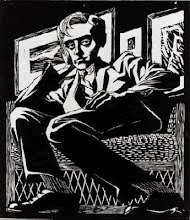


 Posts
Posts


