Wednesday, August 30, 2023

Casual Shorts & the ISFdb Top Short Fiction # 25: The Machine Stops by E. M. Forster


Forster, E. M. "The Machine Stops." The Oxford and Cambridge Review, Michaelmas Term (November) 1909.

This article is part of my attempt to read all the 155 stories currently (as of 1 November 2022) on the ISFdb's Top Short Fiction list. Please see the introduction and list of stories hereI am encouraging readers to rate the stories and books they have read on the ISFdb.


ISFdb Rating:   9.00/10
My Rating:        8/10


"Imagine, if you can, a small room, hexagonal in shape, like the cell of a bee."

In the distant future, humanity has reached a climax in their evolution, as humans have nestled into a stagnant existence. Some time before, people believed that it would be to their benefit to construct a great machine that spans the globe underground, and in which now are contained many cells that are home to individuals. Society is controlled by what appears to be artificial intelligence (as viewed in 1909), and humans are kept at bay: distracted by ideas, made to fear the outside, controlled birth and weaning, while babies born with special abilities, such as advanced athletics, are "destroyed." It appears the Machine is looking out for the interest of the people, but the people are instead being trained to worship the Machine.

People rarely leave their cells, and have access to an assortment of buttons, each of which, by being pressed, provides the person with their immediate need: feeding, bathing, communicating with others in primitive audio or video, listening to music, attending lectures, and so forth. Like today's internet, people can also access information, texts and music of the past. Thanks to the Machine (now capital M), humanity no longer progresses, and people pursue frivolous acts, seeking new ideas and preparing to share them with others either through private communication or public lectures. This pursuit of "ideas" is intended to prevent humans from accessing true Ideas--those associated with their existence. Like television and the internet which distract more than they educate, Forster manages to foresee a future that is close to today's reality. The story seems to have had a resurgence during the pandemic lockdown, as we were living in cells and pursuing frivolous activities.

The novelette focuses on Vashti, a woman content to be a part of the Machine. In a moment of pure irony, Vashti encounters the greatest form of ideas in the use of her imagination, as she views the clouds while riding in an air-ship: "Their shapes were fantastic; one of them resembled a prostate man. 'No ideas here', murmured Vashti, and hid the Caucasus behind a metal blind." This need to distance oneself from the outside world is an act of limiting thought and imagination. True progress is technological, not social, as "progress had come to mean the progress of the Machine."

Vashti receives a call from her son, who is interested in the outdoors and in the stars, concepts that make Vashti uncomfortable. Her son requests a visit from her, and reluctantly she agrees. In person, he admits to having committed a great crime: he has found a way to the outside world, and gave in to his need to pursue it, even though the act can result in "homelessness": being left outside to die.

An extraordinary story and well ahead of its time. The story appeared during a time of transition for dystopian fiction. We are moving away from the fantasy dystopias of Sir Thomas Moore, Jonathan Swift, and Samuel Butler, and toward more technological and science fiction dystopias. Forster apparently wrote the story as a response to the utopian fiction of H. G. Wells, who frequently wrote positively about technological advance, and believed that technology would bring much good to mankind despite potential dangers. Forster's vision is evidently darker. Later twentieth century dystopian novels have clearly borrowed or were influenced by "The Machine Stops." Forster himself was familiar with the precursors to dystopian fiction and early science fiction writing, and forged his work entirely around technology, replacing leadership with artificial intelligence and the dystopian hero who was an outsider and, with Forster, is now born into the dystopian world, rather than the Gullivers of the past who wander into their dystopian realities, whether they be lost lands or a present figure awakening in the future.


Tuesday, August 15, 2023

Casual Shorts & the ISFdb Top Short Fiction # 24: The Cask of Amontillado by Edgar Allan Poe


Poe, Edgar Allan. "The Cask of Amontillado." Godey's Magazine and Lady's Book 33, November 1846; New England Weekly Review, 14 November 1846.

This article is part of my attempt to read all the 155 stories currently (as of 1 November 2022) on the ISFdb's Top Short Fiction list. Please see the introduction and list of stories hereI am encouraging readers to rate the stories and books they have read on the ISFdb.


ISFdb Rating:   9.00/10
My Rating:        10/10

Illustration by Arthur Rakham,
for Tales of Mystery and Imagination,
J. B. Lippincott, 1935

"The thousand injuries of Fortunato I had borne as I best could; but when he ventured upon insult, I vowed revenge."

One of literature's strongest opening sentences launches the reader into the confession of narrator Montresor's horrible act of vengeance against the insulting Fortunato.

As with "The Tell-Tale Heart," Poe does not directly state the motivation for the need to commit murder, and we can only speculate as to what this single insult was to drive Montresor to commit the crime, when a thousand other injuries did not. While the "thousand" is hyperbolic, it is understood through Montresor's descriptions that Fortunato, a well-to-do elite Italian with pride and an ego, is capable of injuring others in an offhanded way. Fortunato makes flippant comments without thought, and is entirely dismissive of the only other person mentioned in the confession, another Italian wine connoisseur by the name of Luchesi. In the brief narrative, Montresor is able to portray the arrogance of Fortunato, who sits atop social circles and despite regularly committing offences, appears otherwise friendly and accommodating, so that his behaviour, kind or offensive, is simply his natural self. He may not have disliked Montresor and simply caused injury in the wake of his stumbling, not always sober path, via flippant remarks not meant to injure others but instead to uphold his own pride. And yet this last insult must have been a doozy, as Montresor reveals himself to be a man of conscience and, unlike the narrator of "The Tell-Tale Heart," of moral awareness. (More on this later.)

Montresor chooses to seek his revenge on carnival day, knowing Fortunato, a connoisseur of wine, would be inebriated and hence off his guard. He would lead the drunken Fortunato with the promise of some pure amontillado, a high quality Italian sherry. Montresor plays on the other's vanity, telling him he needs an expert to be able to identify whether he has purchased true amontillado or wasted his money on mere sherry, and plays on the man's ego by mentioning that he can instead seek the advice of competitor Luchesi. Clearly Fortunato is prideful and egoist.

In contrast, Montresor is overly sensitive. He refers to Fortunato as "my friend" and treats him as a  most beloved companion, though admits early that this treatment was part of his great plan. As they stumble through the catacombs, he says to Fortunato, "you are happy, as once I was," as though poking at him, insinuating that his own happiness left him at the moment of Fortunato's insult. A sensitive man, Montresor, who over an insult plots to kill a man, claims the insult is the reason for his unhappiness, and following the murder suffers a half-century of guilt. The man's disintegration is his sensitivity.

Despite leading Fortunato through his family catacombs, patiently and with intent, Montresor soon suffers pangs of guilt, and maintains that suffering for fifty years. After immuring Fortunato, Montresor is stricken with guilt over what he has done. "My heart grew sick," he says, just as the last stone of his plan has been laid. He attributes the feeling to the dampness of the catacombs, but the wiser reader is aware that the sickness he experiences is moral. Montresor concludes his narrative with: "For the half of a century no mortal has disturbed them. In pace requiescat!" Rest in peace. This solidifies the notion that Montresor, though he acted cold-heartedly, is now burdened with remorse. As some wise critics have indicated, by walling up Fortunato, Montresor has walled himself up, as he narrates this tale half a century after the events, and in that half a century has been burdened by the guilt of his actions.

At the time of its publication, "The Cask of Amontillado" was not among Poe's most popular stories. In fact, it was reprinted only once in his lifetime (compared with at least ten printings of "The Tell-Tale Heart" between 1843-1845, or fourteen printings of "The Facts in the Case of M. Valdemar, 1845-1849). However, it has become among the most anthologized of his short stories, finding its way into anthologies for young adults, as well as horror, crime and literary anthologies for adults, and anthologies used in colleges and universities. For a glimpse of its popularity over the years, visit the story's ISFdb page. Its growing popularity may be that the story needs a closer reading to uncover the narrator's guilt, which is where the emotional impact of the story lies. The emotional impact in "The Tell-Tale Heart," to compare, lies perhaps in the dichotomy between the narrator's love of the old man, and the passionate need to kill him, which is more readily available than the subtler heart of "The Cask of Amontillado."


Tuesday, August 1, 2023

Casual Shorts & the ISFdb Top Short Fiction #23: The Tell-Tale Heart by Edgar Allan Poe


Poe, Edgar Allan. "The Tell-Tale Heart." Pioneer, January 1843; Dollar Newspaper, 25 January 1843.

This article is part of my attempt to read all the 155 stories currently (as of 1 November 2022) on the ISFdb's Top Short Fiction list. Please see the introduction and list of stories hereI am encouraging readers to rate the stories and books they have read on the ISFdb.


ISFdb Rating:   9.00/10
My Rating:        10/10


"True! — nervous — very, very dreadfully nervous I had been and am; but why will you say that I am mad?"

Artwork by Virgil Finlay,
from Fantastic, Fall 1952

A man tells of a murder he has committed, attempting desperately to convince the listener of his sanity. The narrative is driven by a combination of character and plot, as the narrator's skewed judgement drives his actions. The main plot point--the narrator has killed a man--is quickly revealed, as Poe is interested in the teller more than he is in the tale.

The narration centres around the murderer's mental state, with emphasis on his heightened senses, and the detailing of the two major scenes: the murder itself and the police interrogation. Everything else is up for conjecture, and there is much conjecture to be sought. The narrator is more focused on the quieter, indistinguishable sounds, the heartbeats rather than the shrieks. This ends up being his eventual undoing, as he misinterprets ticking for the beating of the dead man's heart. The title emphasizes this, but it is ironic, as the heart is obviously silent, and cannot tell a tale, nor tattle tale (as was Poe's intention for the title). It is not the heart that tells, but the mind, the same mind that led the narrator to commit the horrible deed.

"The tell-Tale Heart" is among Poe's shortest stories, and its brevity is the result of the stripping of much detail. Poe also employs his own form of minimalism, and motive for the crime and the relationship between the killer and his victim are not directly revealed. As a result there is a good deal of work to be done by the reader in order to understand the relationship between murderer and victim, as well as the motive for the crime. Poe does sprinkle the test with hints for both, and over the years several interesting theories have been developed.

Many interpretations suggest the narrator is related to the "old man," either a son-father or nephew-uncle relationship. However, Poe inserts a few small clues to dissuade the interpretation that the two are related. We assume an age gap as the narrator refers to his victim as an old man. Beyond this, the relationship appears to be more business-like, somewhat formal as they live together and yet all of the old man's belongings are stored in his own room, and the narrator examines them without an emotional response, as though the objects are foreign to him. We are given the impression that the narrator owns the house, as it is he who answers the door when the police arrive, and it is he the police is interested in. He gives the investigators a tour of the house, accessing all of its rooms. The old man, then, is possibly a lodger. That his single room is filled with all his belongings, as mentioned above, we can assume the other rooms in the house are off limits to him, at least to a degree, or at least not in his possession as he would have his little trinkets all over the place, not just in the single room he occupies. Poe is also specific that the house is in the midst of an urban setting. This is an important point, since at the time houses along urban streets were built side-by-side, attached to one another. Poe reveals that it is a neighbour who calls the police, having heard noise. This tight-housed urban landscape is used in many of Poe's stories, notable "The Black Cat," whose geography is also integral to the story's plot.

Given these details, my interpretation of the story is that the men are unrelated, yet have been living together for some time, as there is an intimacy between them. "I loved the old man," says the narrator, and we have no reason to not believe this statement. The "old man" is used as a form of endearment, and is repeated each time without disdain. So why would this possible landlord want to murder a beloved old man whom, so he tells us, has no money or valuables, and whom he professes to love?

The narrator claims he wanted to destroy the old man's eye which he sees akin to that of a vulture. The narrator separates the eye from the man, so that he loves the man, but hates the eye. He is unable to harm the man, and it is the eye that he wishes to destroy. He is in this way excising himself from committing murder, as he is destroying an object and not a person. But why would he want to destroy this eye? It is "a pale blue eye, with a film over it," and every time the eye "fell upon" the narrator, his "blood ran cold." It is a creepy, ugly eye--the eye of a buzzard. The old man would watch the narrator, we suspect, and that look perhaps held a hint of judgement or disapproval, or simple wariness as the narrator has heightened senses and likely behaves daily with this defect. Perhaps there is no specific look given by the old man, but the narrator's heightened senses and paranoia may lead him to believe that there is. Described as a vulture's eye, we understand that a vulture is a scavenger, seeking carcasses rather than hunting and gathering, so that it is possible the narrator believed the old man was coveting his home or his belongings, as the old man in his advanced age had so little, and was forced to be content lodging in the home of this madman.

And so the conjecture can run on. Why Poe left us so little detail in this story is not problematic. He is interested in the character, his voice and the irony of his own undoing. Yet the food for thought left behind is of value to the reader, as we have such a short but rich text to appreciate.


For more of this week's Short Story Wednesday, please visit Patti Abbott's blog.

Thursday, July 13, 2023

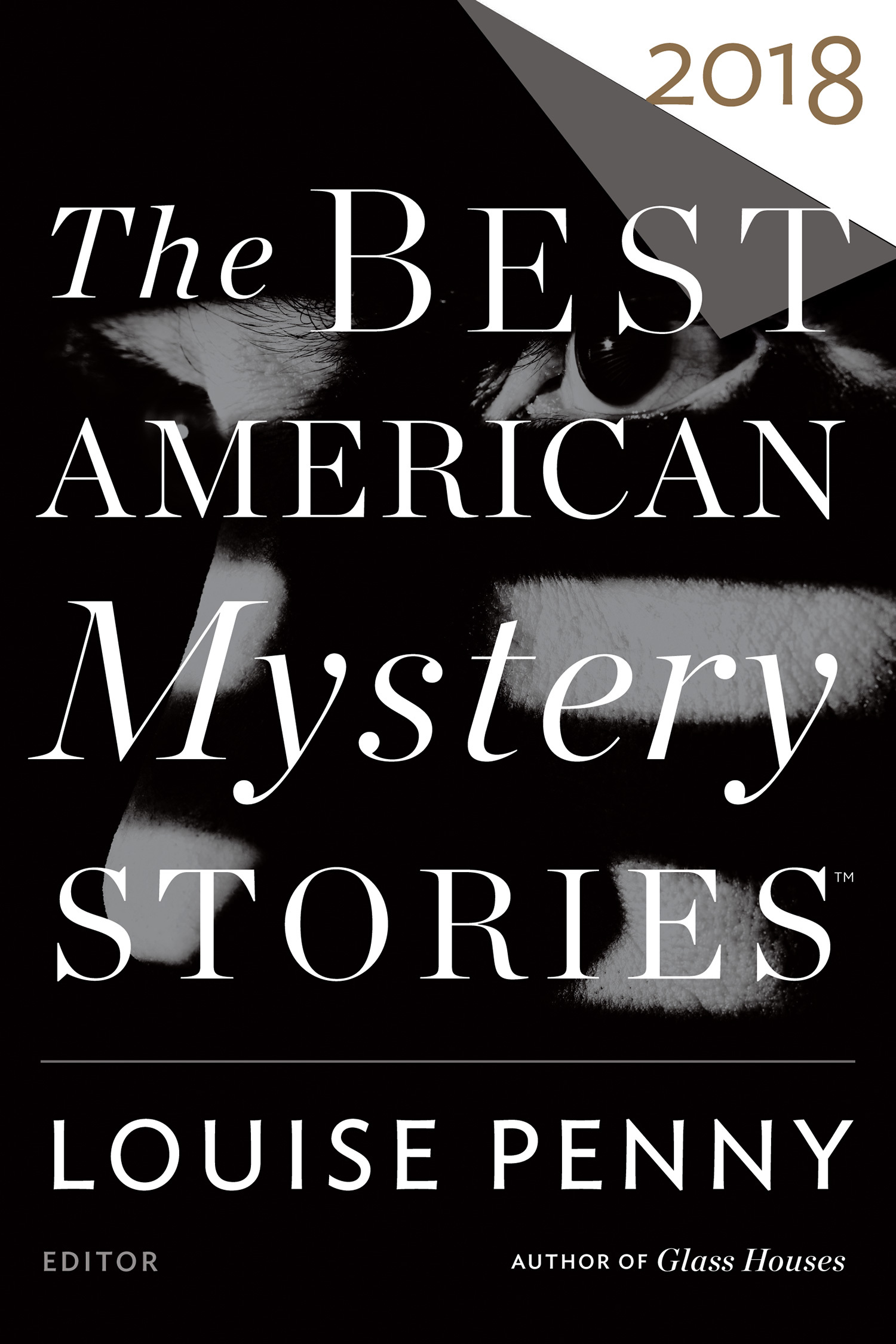
Louise Penny, The Best American Mysteries Stories 2018


Penny, Louise, ed. The Best American Mysteries Stories 2018 (Otto Penzler, series editor). Boston & New York: Houghton Mifflin Harcourt, 2018.

The Best American Mystery Stories 2018 at Goodreads

Overall rating:     6/10


In my attempt at reading more contemporary fiction, I selected this book for mystery (with another "Best of" anthology for contemporary horror, and some modern literature for a novel). So much reading to get through, I had little time for writing. Now that I am the end of that stint, I can write about it all, beginning with my least favourite of the batch.

The selection of stories in The Best American Mysteries Stories 2018 is somewhat varied, though there appears to be a slight shift toward more adventure or thriller stories, where the mystery transforms into a climactic showdown or chase, and where the mystery element feels almost secondary to the action, like a standard Hollywood movie. This is not necessarily a bad thing, but for many of these stories, such as David Edgerley Gates's "Cabin Fever" and David A. Hendrickson's "Death in Serengeti," we know how it is going end, so other elements need to be elevated and the action shortened. Though I understand many readers may prefer the adrenaline brought on by the action, this is not my sub-genre of choice.

Less varied is the gender of the authors. Of the twenty stories in the anthology, a whopping two are written by women. Ten percent. According to the UN, there is a greater representation of women in parliament than there is in this anthology.

(I wonder how much the selections in these best-of books are influenced by the stories' authors, so editors & publishers choose entries not on the individual story merits, but on their author or a combination of the two, to help increase sales. The best stories here are not necessarily by the more recognizable authors. Both women are big names.)

As usual I prefer the stories that are character-based, and the real stand-out for me is T. C. Boyle's "The Designee," which I read as a modern tragedy. Other strong stories are Rob Hart's "Takeout," the excellently titled opening story by Louis Bayard, "Banana Triangle Six," Scott Loring Sanders's "Waiting on Joe," and "All Our Yesterday's" by Andrew Klavan. I also like the the Joyce Carol Oates novelette, though I feel it does not belong in this book. The rest are pretty forgettable.


Banana Triangle Six by Louis Bayard     7/10
Ellery Queen’s Mystery Magazine, July/August 2017

Eighty-four year-old Mr. Hank is living out his days at the Morning Has Broken home for the elderly. He is grumpily abandoning his lunch and heading to his room for a nap. His memory seems to be fading, and he barely recognizes the woman, Dr. Landis, who appears unexpectedly in his room to run a few small tests. A touching story, tightly written, and a good one to launch the collection.


Y is for Yangchuan Lizard by Andrew Bourelle     7/10
D is for Dinosaur, edited by Rhonda Parrish, Edmonton: Poise and Pen, 2017

To pay off a debt, a young man sells drugs from a bar for the Chechen mafia. When his friend gets ahold of a rare bag of coke mixed with dinosaur bones, the mafia is prepared to commit murder in order to get their hands on the stash. A pretty good read with some standard twists, elevated by a nice dark undertone of hopelessness.


The Designee by T. C. Boyle     8/10
The Iowa Review, 47:2, Fall 2017

I have yet to read a story by T. C. Boyle (author of "Greasy Lake") that I do not like. In this one, a retired elderly professor is caught in a mail scheme that sees him slowly sending his life savings overseas. A painful read, as we know what is transpiring and must be content to continue amid frustration and outrage. This story's designation here as a mystery is arguable: while it has elements of mystery, so does every short story, yet this one doesn't hinge on any moment of discovery or climax. It is more of a character study and a portrait of a very real scheme that has seen so many retirees taken for so much money. Very well written with a heartbreaking finish.


Smoked by Michael Bracken     6/10
Noir at the Salad Bar, edited by Verena Rose, Harriette Sacker, and Shawn Reilly Simmons, Level Best Books, 2017

In small town Texa,s Beau James is running the Quarryville Smokehouse. When his photo appears in a local paper, he fears he has been outed as he settled in town via the witness protection program. A fairly average story with a noisy climax.


The Wild Side of Life by James Lee Burke     6/10
The Southern Review, Winter 2017

Oil driller has an affair with the wife of Louisiana bigshot who runs the local police. Some familiar events, focus on PTSD following a tragic event many years before, and a rushed and dwindling finish. The title refers to a country song.


Too Much Time by Lee Child     6.5/10
No Middle Name, Delacorte Press, 2017

While walking through a plaza minding his own business, Jack Reacher witnesses the snatch-theft of a handbag and gets involved in the investigation, the cops pulling him in as a key witness. This novella is my first Jack Reacher, and I did enjoy it, though it could have been shorter. I guess it took just too much time reading this...


The Third Panel by Michael Connolly     6/10
Alive in Shape and Color, edited by Lawrence Block, 2017

Police investigate a brutal crime scene at a model home in an abandoned development area seventy miles from Los Angeles that was being used as a meth cookhouse. An FBI agent arrives to determine if it matches other similar crimes attributed to a group calling themselves The Third Panel. Pretty good short story with a minor, semi-expected twist.


Gun Work by John M. Floyd     6/10
Coast to Coast: Private Eyes from Sea to Shining Sea, edited by Andrew McAleer and Paul D. Marks, Down & Out Books, 2017

A western tale of mystery. Investigator Will Parker is sent to uncover the truth about a twenty-two year incident involving a retired sheriff and the shooting of a wanted criminal. Average story with an expected finish


Cabin Fever by David Edgerley Gates     6/10
Alfred Hitchcock's Mystery Magazine, September/October 2017

Ranger Hector is caught in a storm in the midst of the wild, while a pair of cold-blooded murderers are on the loose after a prison bus turns over. The story shifts between Hector and the two escaped convicts who take him hostage, and the FBI and the ranger's girlfriend medic who try to locate him, while coordinating a wildfire triggered by lightning. This is a common formula and I was not too invested in this one, as we can guess early on how it will turn out.


Small Signs by Charlaine Harris     6/10
Ellery Queen's Mystery Magazine, November/December 2017

High school principal and former trainer of government operatives Anne DeWitt is surprised by a visit from former colleagues. It appears money has been laundered from the training camp, and Anne's replacement at the camp is desperate to discover the culprit. This is part of a series of short stories featuring Anne DeWitt with her new identity. This one was alright, but the quick scenes needed to be interspersed with so much background information for those unfamiliar with the series (such as myself), that it only became interesting half-way through.


Takeout by Rob Hart     8/10
Mystery Tribune, Issue No. 2, Summer 2017

To pay off a gambling debt to the Chinese gambling house and restaurant, The Happy Dumpling, Harold makes special takeout deliveries for owner Mr. Mo. He does not, however, deliver food, but rather messages in the form of seemingly random items. Harold wants out, but behind on alimony payments and wanting to get on the good side of his former wife and their six year-old daughter, he has no choice but to continue. Until an option comes to light.

A character driven story that also presents a great situation and environment, this story is a slice of life, a few days amid a hefty sequence of events. Well written and well framed, each moment is both necessary and interesting, and honestly I liked the scenario so much, with its not-too-likable protagonist, I would have read a good deal more. In addition, it has something many of the stories in the anthology do not: a great ending.


Death in the Serengeti by David H. Hendrickson     6/10
Fiction River #24: Pulse Pounders Adrenaline, edited by Kevin J. Anderson, July 2017

Senior Serengeti park ranger Makinda comes across the carcasses of several elephants, their ivory tusks sawed off. Shortly thereafter his jeep explodes, followed by additional explosions in the distance as the vehicles of the other rangers in the district also explode. Makinda becomes aware that he has just evaded being murdered, and that there are dangerous poachers in the vicinity who have likely killed his colleagues, leaving him alone to fight the threat.

The most interesting aspect of the story is the tragic and cold-blooded poaching business, which genuinely enraged me as I was reading. While this made me emotionally invested in the story, this is the kind of adventure story in which I am not normally interested. Also, because I was emotionally invested, I was hoping for a better finishing off of the culprits, something more poetic and long-lasting, whereas they were simply done away with all too quickly.

The story received the 2018 Derringer Award for "Best Long Story" (4,001-8,000 words).


All Our Yesterdays by Andrew Klavan     7/10
Ellery Queen's Mystery Magazine, March/April 2017

During the First World War, Brooks is injured during a charge from his trench, and is sent to England for a lengthy recuperation period. He finds that everything has changed--not just the world around him, but his own self as well. He experiences blackouts and sudden, strong bouts of fear and anger, often associated with inexplicable rage. He longs for a former time, during the late nineteenth century when times were easier and women, in particular, were purer. He befriends his older doctor with whom he feels the need to reminiscence, yet while Dr. Haven tries to explain that it was not a better time, that there was darkness even then, Brooks's desire to talk about the past does not dampen, and his blackouts, which he keeps a secret, seem to become more severe.

What a long description for this excellent story that had me glued. A great finish as well that links the details nicely.


PX Christmas by Martin Limón     6/10
The Usual Santas: A Collection of Soho Crime Christmas Capers, (no credited editor), Random House, 2017

In the Korean demilitarized zone, a pair of American army officers investigate the abuse of the military PX shop, a shop designed for the military and their spouses where imported items can be purchased at low cost. Some wives abuse the shops by making their purchases and selling them in Seoul for great profit, and one of these is sighted by our officers.

The premise of the story is its strongest aspect, as the plot to re-take the wife and make sure Huk leaves everyone alone is less interesting than the mechanisms of the US military in the DMZ.


Windward by Paul D. Marks     6/10
Coast to Coast: Private Eyes from Sea to Shining Sea, edited by Andrew McAleer and Paul D. Marks, Down & Out Books, 2017

Private investigator receives a visit from no-nonsense successful film producer claiming his wife has disappeared and that the police believe she has simply run off. PI investigates, theorizes, things happen and mystery is resolved. Fairly average tale with fairly average PI.


Phantomwise: 1972 by Joyce Carol Oates     7/10
Ellery Queen Mystery Magazine, September/October 2017

Undergraduate student Alyce is seduced and impregnated by one of her young instructors, who soon thereafter distances himself from her. In the meantime, Alyce befriends visiting professor and successful poet Roland, who hires her to help collect his papers.

While there is a clear element of mystery, and even crime, these are relegated to the backdrop, as the story focuses on Alyce and her complicated relationship with Roland. This is also the most interesting element of the story, so that as a mystery it is weaker than as a character study. I sympathized with both Alyce and Roland, and would even have liked to see their relationship continue to develop. The ending moves away from this and does its own thing.


Rule Number One by Alan Orloff     7/10
Snowbound: Best New England Crime Stories 2017, Shawn Reilly Simmons, Harriette Sackler, Verena Rose, editors, Level best Books, 2017

A thief helps his aging, retiring mentor by allowing him to take part in one final heist. And of course, there is much double-crossing. A familiar set-up, and you can figure out the ending at the last leg, but it is nonetheless an enjoyable, well written story.


The Apex Predator by William Dylan Powell     6/10
Switchblade #1, Scotch Rutherford ed., 2017

Professional diver is hired to help police locate sunken cars in an attempt to close unsolved disappearances. When preparing a sunken Camaro and its pair of police corpses for ascent, our diver notices there are hundred dollar bills floating around in the vehicle. Down on his luck, he decides to keep the stash for himself.

Pretty good, but the first half is far more interesting than the second, and I didn't care for for the jokey ending. I really liked the concept of recovering sunken vehicles and would read more on that topic.


Waiting on Joe by Scott Loring Sanders     8/10
Shooting Creek and Other Stories, Down & Out Books, March 2017

Christmas tree plantation worker loves his dog, so much that he whittles wood into little mutt statues. That mutt digs close to the house and comes up with a human foot. This leads to so much, and sets up expectations which it nicely tears down as the narrative progresses. Highly enjoyable, not only in plotting but also in tone. The narrator's voice is a blast and the story ends as well as it begins.


Breadfruit by Brian Silverman     6/10
Mystery Tribune, Fall 2017

Former firefighter and current bar owner in St. Pierre, Len Buonfiglio, finds a pair of local breadfruit on his bar. Shortly thereafter he is visited by a man claiming interest in exporting breadfruit. A great opening wanes as the story gets into its final action sequence, with which I am less interested. However the focus on breadfruit and the conversation between the men, as well as the locale and surrounding characters, all work well.

Wednesday, April 19, 2023

Beyond Fantasy Fiction, July 1953


Beyond Fantasy Fiction. H. L. Gold, editor. Vol. 1 No. 1, July 1953

Beyond Fantasy Fiction 1:1 at the ISFdb
Beyond Fantasy Fiction 1:1 at Goodreads

Overall     7/10


Cover by Richard Powers
Successful science fiction editor H. L. Gold was hoping to equal his success with Galaxy Science Fiction by producing a monthly fantasy magazine, titled Beyond Fantasy Fiction, Though for this new publication he recruited top notch authors and illustrators, many of whom he had worked with on Galaxy, the magazine survived only ten issues. Perhaps readers had a preference for science fiction at the time, or perhaps the fact that the magazine included various forms of genre and not just fantasy, with some stories being outright science fiction, fantasy readers lost interest early on.

Regardless, Beyond featured some strong stories, and this first issue included nothing terrible and some good content. My personal favourite stories are "The Springbird" by Roger Dee and "Share Alike" by Jerome Bixby and Joe E. Dean. In addition, most of the art is quite good, particularly Ed Emshwiller's work on Damon Knight's "Babel II."

Too bad about all the typos that can break up some focused reading. My favourite is from "Eye of Iniquity": "...if you except the fact that my own mother was born with a caul..." [139]


...And My Fear is Great... by Theodore Sturgeon     7/10
Eighteen year-old Don meets sixty year-old Miss Phoebe, a woman with special powers who takes the misguided man under her wing. She opens his mind to eastern philosophical concepts, and gets him to think about the world around him, wishing to share her power with him in order to do good. However, she tells him he must remain celibate and alone, whereas he has recently fallen in love.

A good story with some issues, such as a point of view that jumps for convenience sake to withhold some information from the reader, and a didactic latter portion. Still interesting, with good character dynamics and overall quite original.


All of You by James McConnell     6/10

An unhappy, corpulent man has fled Earth and crash-landed on a distant planet. There he is found by an alien female who immediately falls in love with him, as obesity is valued in their culture. Yet in this matriarchal world the elder women take the man from her, claiming that all their females should have rights on him, come mating season. A nice little piece of space horror that becomes obvious at about the half-way mark, though the author does well in delaying the eventual end. An example of a non-fantastical story.


The Day the World Ended by Frank M. Robinson     6/10

TV reporter Bill Wyser interviews Professor Arnold, a scientist who has just appeared on a program pitting science against superstition. The pair argue both sides, and Arnold informs him that his university will pay anyone ten grand if they can come up with a superstition that gives a better explanation for a phenomena than does science. Short and entertaining enough, though I was underwhelmed by the ending.


The Springbird by Roger Dee     8/10

Marble County finds itself in perpetual spring, as April weather conditions continue for seven months. The country doctor narrator takes a weekly drive to Moorhead Mountain to visit Romanian gipsy Lysko Czernak who lives with his grandson, who is dying from tuberculosis. A touching story of love and what we are capable of when it comes to making someone happy. Moreover, it is well written, with soft prose that matches the slow passing of spring.


Babel II by Damon Knight     6/10

Photographer and comics artist Cavanaugh encounters an odd little man he refers to as Hooligan. They can communicate through a spherical object where they can think up images, and quickly the Hooligan wants to trade diamonds for the many objects in Cavanaugh's home. Unintentionally, the Hooligan mixes up human languages, so that chaos quickly breaks out as no one can understand one another.

An average story with some good points. Though the story is intended to be humourous, the quick regression to violence is wholly unbelievable. Also, Cavanaugh's running around New York is tedious and needless. The Hooligan and its communication device are neat, but only bookend the story. I am usually underwhelmed with Knight's novelettes, preferring his shorter pieces. Stories like "Babel II," "Double Meaning" and "Rule Golden" contain some neat ideas, but aren't developed well as longer works.


Share Alike by Jerome Bixby and Joe E. Dean     8/10

A pair of men are stranded in a lifeboat after their ship has sunk. They are not too worried as neither men knew anyone aboard who had perished, and there is much food and water in the boat's store. Moreover, they are in a well-travelled ship lane. Only, the American Craig is eating his share of the stock, whereas the Romanian Eric seems not to be eating at all, and Craig begins to suspect that his mate is a vampire. A very well written story with a strong relationship between two very different men who are forced to share--one his portion of the stores and the other his blood--in order that they both survive.


The Wedding by Richard Matheson     6/10

Before they are to be married, Frank begins to place unusual demands surrounding their wedding, such as not getting married on a Thursday and paying her father as symbol of the purchase of his daughter. A quick and amusing story with an effective comedic twist. The second story in the issue to revolve around superstitions.


Eye for Iniquity by T. L. Sheperd     6/10

McNally has the inherited talent of duplicating money. Simply by staring at a bill, a duplicate will appear beside it. He puts the talent to good use, quits his job, buys a house, and takes his family shopping. Then he learns there is concern as counterfeit money is being discovered in various shops, and soon the government begins to take interest in him.

Interesting enough of a story, but the protagonist is not very smart so it is difficult to sympathize with him. Along with some stereotypical service agents and revenue bureau officers, with the standard 1950s agreeable wife, the story fizzles in its latter stages, particularly that it is overlong.


Tuesday, April 4, 2023

R. Chetwynd-Hayes, editor: Tales of Terror from Outer Space (1975)

 
Chetwynd-Hayes, R, editor. Tales of Terror from Outer Space. UK: Fontana Books, 1975.

Tales of Terror from Outer Space at the ISFdb
Tales of Terror from Outer Space at Goodreads

Cover by Justin Todd

Overall rating:     7/10

A part of the Fontana Tales of Terror series.

Where I was expecting a batch of silly stories, aside from the couple I'd already read, I was impressed as to how strong these stories are. While most of them deal with aliens coming to Earth for one reason or other, the motives behind each arrival differ story to story, and the plotting and styles are surprisingly varied for a topic that appears limited.

A couple of stories don't really fit the bill. The Sheckley, though a good story, is not horror despite having aliens arriving on Earth. Chetwynd-Hayes covers this in his introduction by stating that the stories "deal with invaders that either menace or disrupt the inhabitants of this already, agitated planet." The aliens here are nice enough and do not "invade," though they agitate one man, for a time. The Clarke is more of a quick joke, lightly entertaining but not horrifying. Sure the sun is about to explode, but there are so many other stories featuring this premise that present it more horrifically, such as Richard Matheson's "The Last Day," whereas Clarke is having fun and using a comedic tone.

My favourite story in the collection is easily the dark invasion story by French author Claude Veillot, "The First Days of May," well translated by Damon Knight. Close behind are those by the two Rays, Bradbury and Nelson, followed in turn by the Aldiss, the Bloch and the Sheckley. My least favourite would be the comedic pieces, led by the editor's own original entry.

Chetwynd-Hayes's introduction is a series of story synopses, so I treated it more like an epilogue. I prefer knowing as little as possible about a story when I begin to read, but I always read anthology and collection introductions. A good intro though, and he makes a nice link between his story and the one by Bounds, when he writes: "I think I would rather shake hands with Sydney J. Bounds's Animators." This sentence gives a hint as to the final joke in "Shipwreck."


I, Mars by Ray Bradbury     8/10
Super Science Stories, April 1949

Eighty year-old Emil Barton has been stranded on Mars for sixty years, after every colonist returned to Earth when global war erupted. He receives a phone call from himself, from recordings he had made when he was in his in twenties. And the calls keep coming, arrogant and mocking, tormenting the old man. An excellently dark story, in which a man suffers unceasingly for decades, and really for no apparent reason. Surprisingly, this story does not appear to have as yet been included in a Bradbury collection. This is the only story in the collection that does not feature an alien, and instead of having an extra terrestrial visit Earth, we have a human on Mars.


Eight O'Clock in the Morning by Ray Nelson     8/10
The Magazine of Fantasy and Science Fiction, November 1963

George Nada awakens, not from sleep but from hypnosis, and becomes aware that there are aliens amidst humans. Not only do the aliens live among us, but they control humans via television and radio, brainwashing them to consume, reproduce and to obey. Certainly more pertinent today than in 1963, where the internet can be added to the mix. A good story overall with impact still felt sixty years after its original publication.

This is the short story that was adapted for John Carpenter's highly entertaining film, They Live.


Girl from Mars by Robert Bloch     7/10
Fantastic Adventures, March 1950 (as "The Girl from Mars")

Circus owner Ace Clawson has been unlucky lately. Business is slow, weather is bad and his girl has recently run off on him, But when an attractive woman shows up, claiming to be from Mars, he thinks his luck is about to change. Though predictable, Bloch writes with such charm that it is nonetheless enjoyable, and well written with a restrained humour and a deft handling of sex for the time.


Heresies of the Huge God by Brian W. Aldiss     7/10
Galaxy Magazine, August 1966

A manuscript by an official scribe nearly a thousand years in the future, recounts the devastation of the Earth after a large object lands, covering most of Europe, Africa and parts of the Middle East. The event caused major changes to the planet's landscape, and sent humans into the religious fanatical dark ages. A truly original idea by Aldiss, and well constructed.


The Head-Hunters by Ralph Williams     6/10
Astounding Science Fiction, October 1951

In the Alaskan wilderness a man has escaped captivity from an alien head-hunter, and seeks the aid of a hunter and his guide who he has stumbled upon. The story employs a third person multiple point of view structure, shifting from the fugitive to the hunters and even to the alien as well, which elevates the otherwise standard plot. The ending itself is flat. There are similarities to the film Predator, and I suppose the author has a case to sue the filmmakers, the way Harlan Ellison got away with suing (an out-of-court arrangement) the makers of The Terminator.


The Animators by Sydney J. Bounds     6.5/10
Tales of Terror from Outer Space, edited by R. Chetwynd Hayes, Fontana Books, 1975

A group of scientists are collecting and studying specimens on Mars, when they accidentally awaken a virus that transforms humans into zombies. A surprisingly enjoyable story with a straightforward horror plot.

The story was adapted for the slightly enjoyable 2013 movie, The Last Days on Mars.


The Night of the Seventh Finger by Robert Presslie     7/10
New Writings in S-F 7, edited by John Carnell, Corgi, 1966

A teenage girl is taken hostage by a large, seven-fingered man who claims to be from outer space from the distant future. He will not hurt her, he repeats, but needs her help as he senses her natural female empathy. The story is made up of a single conversation, and the plot plays out within that conversation. A good story with some nice twists as the details of the situation become clearer. I am not familiar with Robert Presslie (1920 - 2000), a Scottish author with a number of short stories published in the UK during a ten-year span (1955-1966). I would be interested in discovering more of his work.


No More for Mary by Charles Birkin     5/10
Where Terror Stalked and Other Horror Stories, Tandem Press, 1966

Popular playwright Toby Lewis is near completing his latest play, and sets it aside for a holiday in Italy. There he discovers an unusual one-eyed insect, and decides to keep it in a jar for his sister Mary, an entomologist. The story offers some twists, but it just is not that interesting of a read, and the entire thing falls flat.


Invasion of Privacy by Bob Shaw     7/10
Amazing Science Fiction, July 1970

George Ferguson grows weary of his wife's unnatural mourning for her recently departed mother, while their seven year-old son insists that he has just seen his grandma, two weeks after her death. A premised ghost story that turns out to be something more complex. Plot aside, which is pretty good, the strongest element in the story is, without giving too much away, the dad's eventual struggle with his son's identity. It would be nice to see this portion developed further, but Shaw ended the story in the midst of this discovery, the moment of which is truly creepy.


The Ruum by Arthur Porges     6/10
The Magazine of Fantasy and Science Fiction, October 1953

In the distant past, a group of aliens dashing through space accidentally leave a ruum on the third planet of our solar system, intending to return, but preventing from doing so by a devastating space battle. In the present day Earth, a uranium prospector flies to the Canadian Rockies where he encounters the alien ruum. The thing has preserved several animals across time, and now appears to have its sights on the encroaching prospector.

This was included in Edmund Crispin's Best SF (1955), where I first read it many years ago. Even then, though a decent enough story, I'm pretty sure there were many stronger works published during the years covered (1948 - 1954).


The First Days of May by Claude Veillot     8/10
Translation of "Les premiers jours de mai" by Damon Knight
Fiction, #78, May 1960
The Magazine of Fantasy and Science Fiction, December 1961

Earth is invaded by an insect-like alien species, named Shrills for the piercing shrill sound they make that deafens and paralyses humans. A man is holed up in a hotel, and overcomes his fear to search for his wife. An excellent story; a truly dark vision of an invasion and humanity's dark side that emerges when hopelessly taken over by another race.


Specialist by Robert Sheckley     7/10
Galaxy Science Fiction, May 1953

A merchant ship containing several intergalactic species that essentially make up the structure of the ship, is blown off course and its Pusher is killed, preventing the crew from returning back home. In order not to perish light years from their own sector, they search the nearby area for a replacement Pusher. The story, though good, does not fit into the horror sci-fi category, and I am not sure which aspect of the story the editor found to be horror. As with the Aldiss story, this is highly original.

I read this a few years back as part of Sheckley's enjoyable collection Untouched By Human Hands (Ballantine, 1954). According to my notes, it impressed me more then than it did now (I had given it an 8/10). Still a good story, though, and I'm surprised I recalled nothing as I re-read it here. EDIT: Nearly a week has passed and this story has stayed with me. Maybe that original 8/10 was more accurate...


No Morning After by Arthur C. Clarke     6/10
Time to Come: Science-Fiction Stories of Tomorrow, edited by August Derleth, April 1954
The Magazine of Fantasy and Science Fiction, July 1956

Five hundred light years from Earth, the Thaarns are desperately reaching out to make telepathic communication with humans, and manage to connect with rocket engineer Dr. William Cross. Heartbroken and intoxicated, however, Cross believes that the voices and images are part of a drunken hallucination, and scoffs at their claim that the Earth's sun is expected to explode in four days.

Not exactly a horror story, as it is more of a quick joke story. Mildly entertaining for what it is, though does not belong in this anthology.


Shipwreck by R. Chetwynd-Hayes     6/10
Tales of Teror from Outer Space, edited by R. Chetwtynd-Hayes, Fontana Books, 1975

An alien being crash lands on Earth and takes over the life form of a young man named Sydney J. Beecham. The creature then joins his new bride and mother-in-law, who are shocked at the drastic change in his personality. The story has the potential to be horrific, particularly the creepy moment when the alien, as Beecham, coldly informs Beecham's wife that he has crashed on the planet and reveals his ultimate goal. Aside from that brief scene the story is mostly comedic, and ends with a punch-line.

I suspect the character of Sydney J. Beecham is named after Sydney J. Bounds. The Bounds story is the only other one original to this anthology, and the two share similar traits: aliens or a virus that reproduce or take over our bodies. Perhaps the two discussed the idea and each went ahead and developed their own version. And there is the little joke the editor makes in his introduction that links the two stories.


For more Wednesday Short Stories, please visit Patti Abbott's blog.

Wednesday, March 29, 2023

Casual Shorts & the ISFdb Top Short Fiction #22: The Pit and the Pendulum by Edgar Allan Poe


Poe, Edgar Allan. "The Pit and the Pendulum." The Gift, a Christmas and New Year's Present for 1843, 1843.

This brief article is part of my attempt to read all the 155 stories currently (as of 1 November 2022) on the ISFdb's Top Short Fiction list. Please see the introduction and list of stories hereI am encouraging readers to rate the stories and books they have read on the ISFdb.

Kobo ebook edition,
cover from an illustration by
Arthur Rackham

ISFdb Rating:   9.00/10
My Rating:        8/10


"I was sick--sick unto death with that long agony; and when they at length unbound me, and I was permitted to sit, I felt that my senses were leaving me."


In the latter stages of the Spanish Inquisition, a self-proclaimed innocent man is sent to Toledo where the truly brutal tortures of the Inquisition are rumoured to take place. There he is deposited in a dungeon, left awaiting his fate. The waiting increases his anxiety, as he can only imagine what the inquisitors have in store for him. He studies his pitch black surroundings, and discovers a pit at the centre of the dungeon. Adding to this discovery, and o his anxiety, he awakens tied down with rope, and descending toward him is a sharp scythe on that infamous pendulum.

To be expected from Poe, a well-written narrative providing much horror. Yet worse than the razor sharp pendulum, the moving walls and the fiery pit, are those nasty accompanying rats. Ingenious of Poe to bring such well detailed and horrible rodents to swarm the protagonist while in such a desperate state, and how those rats are utilized to help save him, a moment that inspired many scenes in popular film.

More ingenious is Poe's attention to detail, as the story takes place in such limited space and with a limited sequence of events. His use of alliteration, particularly in relation to the sweeping scythe, the waking-sleeping delirium and the attention to the senses, gives much body to a tale with so little plot.

The Spanish Inquisition had officially come to an end a few decades prior to the publication of "The Pit and the Pendulum," and periodicals over the years were reporting on the various events that were coming to light as details of the tortures, survival stories and such were being uncovered. Poe, having worked for many of the periodicals, became fascinated with the events of the Inquisition, and came up with his own, wholly invented, method of torture. Just as "The Black Cat" came about with a report of the discovery of a skeleton in the walls of a house, "The Pit and the Pendulum" was the result of other printed articles.

This has never been my favourite of Poe's most famous stories, but the craftsmanship is evident and nonetheless makes for an excellent read. One of those stories that is so cemented in popular western culture that we need not have to read it to know exactly how it plays out.

For more of this week's Wednesday Short Stories, please visit Patti Abbott's blog.

free counters

As of 24 December 2015