Sunday, October 31, 2010

Andrew Cowan, Pig (1994)


Cowan, Andrew. Pig. London: Michael Joseph, 1994.
______. New York: Harcourt Brace & Co., 1994. (pictured below)
______. Harmondsworth: Penguin Books, 1995.
______. SanDiego: Harvest Books, 1997.
______. London: Sceptre, 2002. (my edition, pictured right)

Pig at Goodreads
Pig at IBList

Rating:     7/10


Following the death of his grandmother and his grandfather's removal to a retirement home, fifteen year-old Danny decides to take care of the aging pig that once belonged to his gran. With the help of his Indian girlfriend Surinder, Danny spends the summer caring for the pig as well as for his grandparents' land.

Pig is a tightly-written novel. It is constructed with economy and sensitivity, and is a true pleasure to read. The lack of a straightforward plot kept me at a distance for the first eighty or so pages, but I eventually grew involved with Danny, his relationship with Surinder and his grandparents' land. To a greater extent, even, I was mesmerized by the ravaged rural Scottish landscape.

The novel is set in an unnamed rural region, a once-prospering farmland, later industrial area that has become completely dilapidated. The farming region was bought out by industry, the land promising to yield a prosperous gain of mineral ore. When the land is revealed to contain a mass of useless clay, industry backs away and the remaining stripped farmlands are reduced to decay. At one point Danny is pulling the overgrown vegetables and weeds from his grandparents' land and remarks to Surinder that unattended the land grows wild; this is telling in that the soil is perfect for farming and it was industry that has ruined these fields. Quoting to Danny from her schoolbooks, Surinder tells him that the Victorian era saw a Scotland with a housing problem, an overpopulated land that saw houses overfilled, people pressed into any available quarter, the poor sewage overflowing and causing dysentery, a scene worse than anything she herself had seen in India. Though an unpleasant portrait, it nonetheless shows a land prosperous and filled with life, while Surinder and Danny can ride their bikes for miles without seeing a single soul.

Meanwhile the neighbouring towns are made up of run-down compound buildings overseen by a bureaucratic and unsympathetic housing system. The dingier, run-down flats are meted out to Indian and Pakistani residents. Racism is a problem in this region stuck in the past. Surinder is harassed as is Danny, by association. The two have become outsiders: the land shutting them out with their "No Trespassing" notices and the rough men that are continuously turning them away. Surinder cannot abide by a family whose only hope for her is a future filled with babies while she is seeking knowledge and a better, modern life. Danny's family sees his investment in the pig as wasted time, while his brother sits at home, drinking and refusing to do anything beyond the hoovering. The only person in Danny's family not mired in local inertia is his grandfather, who sits in a Home pining for his lost wife.

Surinder and Danny are sneaking about, facing challenges not only in farm work, the unwelcoming landscape and a region beaten down by constant rains, but also in their juvenile and innocent relationship. Cowan's quiet portrayal of this youthful union is strikingly real as the two are often awkward and clumsy, unable to express any level of emotion through anything but their clumsy gestures.

The novel's one real fault is in its distracting details. While many scenes are vividly and economically rendered, there are many others that are overly detailed. It becomes intrusive and can be irritating. These unnecessary details can be anything from the point a character might be staring at, to the fact that he or she is wiping the table, sloshing some tea. It reads as though the author was trying to add an extra thousand words to the manuscript.

Despite this minor qualm, Pig is a tight, well-written novel whose landscape is alone worth the investment. I was surprised by the lukewarm reviews I read on Goodreads, most emphasizing the strong writing but criticizing the lack of a linear plot. Many seem less than pleased with the comparison to J.D. Salinger's The Catcher in the Rye, and I suppose that comparison, from a New York Times review, has unintentionally damaged the novel. Yes, there are elements of awakening adolescence, but the comparison is not terribly apropos.

Cowan's Pig is a surprisingly good find, and I hope that the novel finds a greater audience.

Monday, October 25, 2010

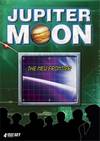
Some thoughts on Jupiter Moon (1990)

I have become addicted to Jupiter Moon.

Jupiter Moon is a UK science fiction soap opera produced in 1990 airing three times a week. It was dropped after about 150 episodes, though only 108 were initially aired. The show was set on Ilea, a space university in permanent orbit above Space City, Callisto moon, in the year 2050. The show was created and produced by William Smethurst. For a brief overview, see the wikipedia article.

I wasn't sure what to make of the first three or four episodes of the show: it was messy, awkward, and the sets and especially the costumes were just plain odd. Yet there was enough to keep me to watching, and by episode eight I was hooked. It is obvious that the writers began by tossing ideas about, as some plot-lines are abruptly dropped, and while the initial set-up appears focused on romantic elements, the love stories quickly take a back seat when the science fiction elements take over. Stuck in a massive cloud, character interactions are heightened and the show becomes quite exciting. The science is feasible (as far as I can tell) and the writing is solid, with realistic dialogue and some great one-liners. There are close to twenty characters to keep up with and the multiple story-lines, with their quick scenes, often clever and usually well delivered dialogue and character-driven action make the show a fast-paced, addictive affair.

What truly makes this show a pleasure to watch is the cast. Each actor does a fine job with their character, and the characters themselves are fascinating because they are dynamic and utterly flawed. (Okay, there is one character who simply annoys me with her repetitive whining, but the rest are fine.) Only two of the actors seem recognizable elsewhere: Anna Chancellor who portrays stunning ambitious navigator Mercedes Page, and dashing character actor Richard Lintern, who plays botanist James Bromwich. Stunning and dashing; the actors are (nearly) all quite good looking (especially the lovely Caroline Evans, the brainy post graduate physicist Chantal de Gracy), but it is a soap opera after all (though I suppose the Star Trek franchise also selected a cast based partially on looks). My personal favourite cast members are Chancellor, along with Andy Rashleigh whose performance as the washed out, pride-filled Captain Eliot Creasy if filled with stubborn principles, subtle sensitivity and a good deal of humour, and Jason Durr, the self-interested Alex Hartmann, who is so good with his strange blond hair and odd German accent that I sometimes hate to even look at him. I also quite like Carolyn Backhouse as the station's, uh, schoolmistress? Despite these personal favourites others do a fine job, and while many seemed to have fallen to acting obscurity some can be seen in other television projects.

Costumes are truly insane, especially those weird bibs some of the men wear, and those less than complimentary bodysuits. I do like that characters recycle their wardrobe, though there are some dresses I would rather not have to look at. The set is silly but part of the fun. Alcohol bottles look like medicine jugs, supply boxes are emptier that the falling boulders in the original Star Trek, and glass coffee mugs are actually colourful Bodums. There is a scene when the sneaky Harmann glues some Mars dust onto a Valentine heart using... you guessed it, a yellow glue stick. The future, with its advanced operating tools, space flight and Jupiter moon stations is still dependent on glue sticks for their arts & crafts projects.

The DVD itself is not as interesting as the show. There is a typo in the menu so that on each disc the sixth episode (the one in the bottom left) reads "Epidose #," while the blurb at the back claims that each episode is "more astronomically addictive than the next!" I believe they meant "than the last"; since the first episode is a little weak and each "next" episode is less addictive I don't anyone could possible even dream of reaching episode 150.

I do have a confession to make: After having watched Episode 21 my interest has shifted. Now that a great threat has (seemingly) passed, character relationships are being re-evaluated and I am finding myself absorbed by the love stories. Hartmann's behaviour actually has me sympathizing though he is being a real jerk, and what will happen between lovely Chantal and dashing James (the way she says "James" makes me want to change my name; why was she never a Bond girl?). She is so adorable in the way she toys with him. Perhaps the show was a cruel ploy to get men hooked onto soap operas, and I am wondering if a British station will ever launch a horror story soap opera, something set during a zombie epidemic perhaps, though I suppose if the actors keep getting eaten it would be truly short-lived.

I am digressing terribly... I will likely share more thoughts as I continue watching.

Friday, October 22, 2010

Bentley Little, The Town (2000, 1997)


Little, Bentley. The Town. New York: Signet Books, 2000


An earlier edition titled Guests was published in the UK by Headline Books, 1997. (I am not sure how or if the two editions differ, though there is a reference to The Store, which was first published in 1998.)

The Town at ISFdbThe Town at Goodreads
The Town at IBList

Rating:     5/10


It is that singleness of effect which Edgar Allan Poe wrote about that makes the short story such a potentially powerful art form. Horror fiction is best suited to the short form, as a single effect or the simplest idea can generate a thunderous impact. A horror novel, on the other hand, must employ a greater variety of effect, of mood and emotion, and certainly of suspense and mystery, in order to be successful in its medium. Along with comedy it is arguably the most difficult genre in the long form, and few lengthy novels are truly successful. It is difficult to maintain a single source of tension over two hundred and more pages as the reader will likely tire of the monotony; variety shifts the reader's attention, whether the variety is in plot or effect. It is not normally enough to populate a novel with numerous characters and stretch the singular idea through character diversity, no matter how many dimensions those characters might have. If the novel's focus of tension is left dangling from a single source idea, it will soon wear thin. This is the first failure of Bentley Little's The Town.

At 276 pages the single effect wears so thin that it becomes almost invisible, and I soon found myself gazing beyond that thin veneer of tension and thinking ahead of the next novel I wanted to read (incidentally, Andrew Cowan's Pig).

The Town is structured through a series of episodes involving a number of characters, though centred mainly around Gregory Tomasov and his family. After winning a substantial Los Angeles lottery and as a consequence feeling idle and inconsequential, Tomasov moves his family (wife, three children and practicing Molokan mother) to his childhood home town of McGuane, Arizona. We soon learn that their new home, along with the entire town, is over-run with "uninvited" spirits. The episodic structure does not suit this novel well, as the episodes are often not directly connected to the central idea, and many scenes do little in enhancing or revealing the mystery around the strange occurrences. The novel does have a clear direction, yet it has little in the way of plot, and this awkward, clunky format leaves the work uneven.

Some scenes are certainly tense, and we find ourselves climbing up a slope toward its climactic peak, while others are seemingly pointless or just plain silly, tossing a roadblock ahead of us and stunting that upward climb. In maintaining its good moments and excising the silly, The Town could have been a decent novella. There is a nice chapter involving a boy who takes a picture of the evil banya, quickly developing the film to reveal the empty and run-down bathhouse filled with the wrinkled forms of some elderly ghosts. Another good moment has Tomasov's wife volunteering at the local library, happily chatting it up with the other volunteers until she learns that each are hopelessly paranoid, believing that the government is concealing the truth about a meteor that is hurtling toward the earth and a doom-filled collision. This tense and surprising moment is shortly followed by a scene depicting a Molokan priest being attacked by his bible. I could not help but laugh and think of Bruce Campbell and the fluttering book in Army of Darkness; though silly, Campbell's escapades are at the least entertaining. Unfortunately, the strange photographs of the banya and the conspiracy theorists at the library never reappear, so that these moments have little to do with anything, making me wonder why I was made to read them.

Bentley Little seems to have had a fairly general and abstract idea, and rather than unite the small parts into a solid an cohesive whole, he simply fills 276 pages with as many creepy (or silly) scenes that fail to help ground the work. Just because something is supernatural does not mean it should not be governed by some form of logic. This is the novel's secondary flaw.

The strange events are never clearly explained and ideas are tossed about randomly, most often never followed up, characters disappear (such as the handyman Odd), so that it all becomes meaningless. Characters receive revelations "suddenly" rather than through any form of deductive process. This haphazard conceptualizing makes for a poor mystery and is not terribly fair to the reader; mysteries should be a collaboration between author and reader, with the reader being involved and taking part in the investigation. Town characters themselves do little active investigating despite the odd occurrences which I suppose makes sense since by the final page we realize there really isn't anything within these pages to investigate.

Despite these two major flaws the novel is strangely not terrible, and this is a mystery I have spent some minutes investigating. The characterization, including relationships, general interaction and internal thought processes, is quite good. There is here an unevenness as well, as some characters are inexplicably shoved to the background (not just in Odd disappearing but Tomasov's daughter Sasha is forgotten over much of the novel's middle while her two siblings are given a large amount of attention). There are some nice surprises near the end and the writing itself is competent. There is also some clunkiness provided by the publisher/printer in the unusual number of typos. The Town is the second novel by Little that I have read, and clearly The Store is a superior work.

On a side note, The Store is mentioned in passing: "There were no chain stores, no corporate gas stations... There was no Wal-Mart or The Store, no Texaco or Shell..." (20) This was a nice touch, and if other Little works are mentioned or alluded to, I was not one to pick up on them.

Sunday, October 10, 2010

Classic Mysteries: A Collection of Mind-bending Masterpieces, Ed. Molly Cooper (1996)

Classic Mysteries: A Collection of Mind-bending Masterpieces. Ed. Molly Cooper, illustrated by Barbara Kiwak. New York: Barnes & Noble Books, Lowell House Juvenile, 1996.

Classic Mysteries at Goodreads
Classic Mysteries at IBList

Rating:     7/10


It is a clever though not unique method to tempt a young audience to read classic authors, such as Chekhov, Twain and Poe, by collecting together a selection of their mysteries. This would also perhaps encourage them to chase down further classic works. This trick worked well on me as a ten year-old. I was first exposed to mysteries from those Alfred Hitchcock Random House anthologies geared to young readers, starting with Spellbinders in Suspense and quickly moving onto other titles. To add to my quickly growing interest in suspense stories, my elementary school English teacher, Mrs. Wise, read aloud some of the classics, and it was from her that I first encountered W.W. Jacobs's "The Monkey's Paw." A little later, as a twelve year-old in my first high school English class, I was first exposed to the wonders of Poe with "The Tell-Tale Heart," and to Shirley Jackson's masterful "The Lottery." There was no turning back.


Classic Mysteries: A Collection of Mind-bending Mysteries collects six such works, all originally published between 1844 and 1927. The stories collected here make up an odd but interesting mix. The title is a little much, though, as really only two of the selections can be called mind-bending, and not because they are beyond reason, but because they have enough plot twists to at least bend the course of one's thoughts. These are Mark Twain's "A Curious Experience" and Anna Katharine Green's "The Ruby and the Caldron." I wonder about the choice to include the weaker Clarence Rook piece; I suppose a young female sleuth would prevent alienating female readers. In fact, most of the stories do have a strong female element, which is refreshing, and likely a conscious consideration by female editor Molly Cooper.


Each author is introduced by Cooper and each story is highlighted by a pencil sketch from Barbara Kiwak. The introductions are quite good as they include some unusual tidbits amid the standard biographical fare we encounter in countless anthologies. The drawings are from an integral point of each story and are a nice addition. Drawn simply and thankfully without modern pretensions, sticking to their time periods, with not too much detail but enough to make the image real and whole. I like Kiwak's interpretations of both the situations and the characters.


Overall the book would entertain most youths, I think, though for adult readers some of the stories are a little tame. I have always enjoyed the works of Chekhov and Twain, and the selections by both are very good, particularly Twain's piece. I was also impressed with lesser-known Anna Katharine Green piece.


The Adventure of the Veiled Lodger by Sir Arthur Conan Doyle     6/10

Strand Magazine 73, February 1927. 109-116

This story is not among Sherlock Holmes's stronger mysteries, and an unusual one in that it does not follow the standard Holmes pattern. The famous detective is called, along with Dr. Watson, to listen to a kind of confession from an unfortunately scarred woman, a confession that reveals the truth about an unsolved mystery involving a murder, a lion and a famous travelling circus. It is not a bad story though it does lack the Holmes & Watson interaction and deduction; indeed the two are but minor characters in this one. It also has one major flaw: why would a woman, desiring confession, request the audience of a detective rather than, say, a minister?


The Safety Match by Anton Chekhov     7/10
1883 (no translator is credited)

A comedic mystery with Chekhov's normally colourful characters. A satire more than a suspense story, the mystery is well wrapped up with the comedy, and the story culminates in a satisfying conclusion. There is so much ridiculousness in the character interactions, the deductions and the many clues that the messy little mystery is pure entertainment.


The Stir Outside the CafĂ© Royal by Clarence Rook     5/10
The Harmsworth Magazine, September 1898

Though it starts interestingly enough, with a young woman hopping off a carriage to follow a man she happens to notice on the street, the identities of the characters quickly become obvious, making the story the weakest among the group.


The Ruby and the Caldron by Anna Katharine Green     7/10
The Amethyst Box, Indianapolis: Bobbs-Merrill Company, April 1905

By the author of the once-popular 1878 novel The Leavenworth Case, one of the best-selling mysteries of all-time, this was a surprisingly good discovery. A fairly light mystery, I thoroughly enjoyed every aspect of it, and kept guessing as to the whereabouts of the ruby right along with sleuth Ebenezer Gryce. Told through the detective's point of view, we follow along as he is invited to a fashionable party to discover who has taken the valuable ruby that, having recently been lost, was in the midst of being returned to its owner. Along with Gryce we make the more obvious assumptions, only to be thwarted again and again.


A Curious Experience by Mark Twain     8/10
Century Illustrated Monthly Magazine, Vol. 23, No. 1, November 1881. 35

This lesser known story by Twain is among the stronger Twain stories I have encountered, and I've admired the author since an early age. This story works on many levels as it not only includes Twain's genuinely funny writing, but also offers a tght plot and good mystery, which is not always present in his short stories.

A young boy wanders into a northern garrison wishing to join the Yankee cause. The garrison colonel is faced with the task of figuring out whether the boy is a clever spy or a misunderstood youth. Openly hilarious with a tight mystery, I highly recommend this one.


(The image on the left is from the Twain piece. A soldier sent to spy on the boy hides in the barn the boy likes to frequent, and watches him place a sheet of paper beneath a haystack. It is one of the more detailed drawings, capturing the scene well and adding some nice shading. The boy's face remains mostly hidden, which adds to the mystery of his identity.)


The Oblong Box by Edgar Allan Poe     7/10
Godey's Magazine and Lady's Book, September 1844

This is a good addition and a strong conclusion to the book, offering something a little darker then the other entries. Though not Poe's best, it is among his stronger rarely collected works. Most anthologies will elect to reprint, for the upteenth time, the classic tales "The Cask of Amontillado," "The Tell-Tale Heart," "The Masque of the Red Death," "The Fall of the House of Usher," and so on, and while those selections are among his stronger works, Poe's other good stories too frequently remain undeservedly unread.


"The Oblong Box" is told through the point of view of a ship's passenger who obsesses about an acquaintance and fellow passenger who has oddly reserved an additional cabin. He boards the ship with an oblong box and an unusually unappealing bride, and not only does the bride share his own cabin, but so does the box, leaving the need for a second cabin a mystery our narrator desires to solve. Though Poe's narrator in this one is quite sane, he is nonetheless as obsessive as the madder characters we encounter in his work. While the mystery is less than shocking, the story is creepy, well paced and, as with Poe, nicely visual.


Tuesday, September 28, 2010

Casual Shorts 4: John Keefauver, "The Tree" (1997)

Keefauver, John. "The Tree." Manoa, Century of Dreams: New Writings from the Philippines. Honolulu: University of Hawaii Press. Vol. 9, No 2. Winter 1997. 86-90


The story is available online at JSTOR, for those with access.

Little-known writer John Keefauver has written some truly unique stories, among them "The Pile of Sand" (1971), "The Great Moveway Jam" (1979) and "The Tree" (1997). These stories are not about single individuals in crisis, but about communities faced with some unusual, even fantastical  situation, and it tells of how each community, in all its different facets, deals with their unlikely circumstance. In "The Pile of Sand," a large sand mountain appears one morning on a beach, and despite the incessant tides it refuses to get washed away. In "The Great Moveway Jam," near-future commuters (of 1999) are trapped in a three-month long traffic jam. These stories contain elements of magic realism, are written in a simple, distant and objective tone, and are more like Kafkaesque moral allegories than run-of-the-mill suspense or fantasy stories.

In "The Tree," an old and isolated community is forced to decide the fate of its most personal emblem: the elm tree that for generations has been used to nail death notices onto. The tree is dying, and after much debate, agricultural experts brought in from the outside insist that the tree is dying as a result not of natural disease, but of all the nails lodged into it. The town is therefore faced with a difficult choice: to remove the death notices and try to save the tree, or to continue nailing the notices until the tree finally dies. The townsfolk are split on this: the elders wish to keep the tree as it is, since they have waited all their lives for their names to be nailed onto it, and the notion of outliving the tree is looked upon as tragic. The younger generation is leaning toward removing the nails and the notices, to perhaps try another method of recording deaths, or of abandoning the practice altogether; some extremists believe the tree should simply be put out of its misery. Heated debate resolves nothing, and filled with anxiety the elders begin to die off at an incredible rate in order that their names be nailed to the tree while the issue remains unresolved and the tree is still alive.

I will not give anything more away as far as plot is concerned, but will discuss some thematic considerations, and herein some inadvertent spoilers might rest. What is most interesting is that the basis of the tradition has changed over time, and that the townsfolk appear to be clinging onto something that exists in a form different than that which their ancestors had intended. The tree was originally used for general notices, but later was taken up with solely death notices, names and dates of townsfolk etched onto "two-by-four-inch metal strips" and nailed to the elm. Moreover, many people expressed the uselessness of the tree, citing that in the town cemetery the names are all clear, whereas on the tree some notices are so weather-worn they are illegible, while others, with so little space remaining on the tree, were nailed near the top, invisible to those standing on the ground. Clinging onto this tradition clearly serves only a sentimental purpose, and somehow gives the town elders a kind of purpose in their meagre lives, as having their names on the tree is more important than making of their years something beneficial to others, to their town or even to themselves.

There is little left in this town for old and young. It has been dying for years, we are told; the once common construction has halted and most of the young have moved away, so that the town elders make up the majority of the population. Since the elders are the majority and since they are the ones clinging tightly to tradition, there is little sense that the town will survive this crisis and rebuild itself.

While the initial purpose of nailing notices onto the tree has been lost, elders now claim that the purpose of nailing death notices is for departed townsfolk to be united on something living. The tree is a perfect repository as it grows in the town's centre. Yet as the town dies so does the tree, and so do the notices, as the dates are rusting off the metal strips "the notices were dying too." (p. 87) In essence, it is the memory of this place that is dying. For years the townspeople have resented the encroachment of outsiders, did not approve of the young moving out, and have even talked of building a wall around the town to prevent outsiders coming in to look at their tree. While some were willing to prosper from their tradition, to invite the tourists and build a hotel and souvenir shop, the elders resented the encroachment and blocked the idea. Plans for change have long been suppressed.

In truth, though dying the village has long been dead. Its newspaper has long ago folded while "the twice-a-day train roared right through town, as if the place didn't even exist." (87) What has changed for the community is their awareness of the town's death and of their own inconsequential existence. The perverted notion of tradition that they are grappling with and the constant emphasis on death is only helping to kill the community, and it is only natural that the elm is dying since, as we are told, it was the symbol of the village's life.

Allegorically speaking the story has much in common with some of Kafka's shorter pieces, mostly in that the allegory can point to many different things. The town was overwhelmed with pride, its attitude toward the outside world and toward those wishing to leave forever prevented it from becoming a part of the world as a whole. The community was a victim of hubris. Yet not only pride, tradition can be linked to other abstract concepts, any form of ideology from religion to communism, taken to an extreme level that isolates itself from a world filled with different forms of ideology.

Whatever direction the allegory points it is clear that the story's protagonist, the tree, is a victim here. The village cannot be the victim since it is made up of its people, and the tree was usurped by the people into this perverted symbol for life that gave the townsfolk the tragic hope for an unattainable immortality. There was only so much that the tree could support, and after many generations it could do nothing but die.

The end of the story is obvious, indicating that man in his stubbornness, pride and lack of wisdom will not change, and that in order to preserve ourselves we continue to make victims of our environment. With "The Tree" Keefauver has given us an excellent short story, and it is truly unfortunate that the story, like his other stories, is not more widely read.


Friday, September 17, 2010

Tales of Tomorrow (Season 2, partial)


Tales of Tomorrow is an anthology series that ran for two seasons, from August 1951 to June 1953, and produced eighty-five episodes (forty-five during the first season and forty in the second). It is widely considered that the show was the first science fiction series produced for television. Like most series at the time it was filmed live, so episodes are filled with a variety of obvious errors: actors screw up lines, shadows of equipment appear on-screen, background noise like coughing get captured in the microphone, and so forth. Among my favourites is a camera pan that accidentally nabs a clear shot of the second camera.

Early television was a combination of stage play and radio drama, yet Tales of Tomorrow proved at times to be quite innovative. Overly dramatic like most early television, the overacting, lofty music scores and over-written scripts can test the patience of contemporary audiences. Yet often the melodramatic elements were so well fused that even by today's standards certain episodes stand out with their superior quality and high innovation. As for the science, well, in season one Leslie Nielsen and Brian Keith breathe easily on Mars, and any unexplained phenomena is the result of nuclear testing. Socially, aliens are essentially Russians in disguise and the thwarting of extraterrestrial forces is really just an allegory for common Americans (often with British accents) succeeding in thwarting some evil Soviet threat. While it is noble that scientists who create technological or medicinal wonders merely for profit are punished, some characters end up in truly tragic circumstances that today's sponsors would never allow contemporary television to resort to. Everything must end happily so that sponsors can endorse their products to a smiling audience rather than one that is depressed and unwilling to fall for clever marketing, something Alfred Hitchcock often had to battle with while working on his own television program.

And there were sponsors for Tales of Tomorrow, though some episodes were oddly without that I wonder how they were financed; was the show that popular? The main sponsor in season two was Kreisler watchbands. I am impressed with Kreisler for seemingly allowing the producers and writers to create original fare, and the must-watch episode "The Window" is the result of allowing the creative forces to produce something incredibly unique that is so rare in television. The Kreisler ad was was built into the unusual episode, and had Kreisler been the only sponsor perhaps there might have been some more variety among the individual plot points, and the show would likely have been titled Kreisler Presents Tales of Tomorrow.

Tales of Tomorrow is improperly titled. These are not, as implied, stories about the future (though one announcer does make that claim during a unique half-time intermission), but stories about average contemporary people; though many of the characters are brilliant scientists, their common desires ground them rather than elevate them, for despite their genius they live simple lives and are driven by everyday goals, usually financial stability, but occasionally fame or world peace. The episodes place character at the forefront, and deal with relationships amid the greedy pursuit of financial gain or the noble pursuit for world peace (usually thwarted by a competitor's greedy pursuit of financial gain). The science is at times incidental, and sometimes there is no science but fantasy, as in "The Ghost Writer." Most episodes hold some element of scientific discovery that, in the bulk of episodes, enables people to pursue their wants, good or evil. Other episodes feature aliens or machines that threaten the lives of a varied group, but even these often include some scientific discovery, such as "Many Happy Returns."

The show is also a great record of the on-screen beginnings of a good many actors. Rod Steiger, Everett Sloane, the already legendary Boris Karloff and even James Dean all get to play scientists. Joanne Woodward, Mercedes McCambridge, Virginia Vincent and other female leads get to play wives and daughters. And Leslie Nielsen kept playing spineless downtrodden writers and thieves; a very good dramatic actor in his youth.

The episodes discussed here are from the DVD Tales of Tomorrow, Collection 3.

All episodes are directed by Don Medford and produced by Mort Abrahams. Many can be watched at the Internet Archive.

"Youth on Tap" (episode 4). Written by Lorna Kenney; starring Robert Alda. (The ad for Kreisler watchbands is directed to those who own one of those popular new round wrist watches. It is entertaining, especially in its odd opening segue from the presenter's flatly-pressed suit to his round arm: "Speaking about round objects...") A scientist (Harry Townes) offers an out-of-work truck driver (Alda) a thousand dollars for a pint of his blood. The audience learns quickly (though trucker Alda is slow on the uptake) that the generous doctor is actually stealing his youth. Like most Tales of Tomorrow, this one offers no surprises, but the building is quite tight. Unfortunately it falls apart when Alda tries to defend the scientist from a previous victim who is suddenly deemed the "mad" character for wanting vengeance on the man who stole his youth, and essentially his life. The performances are fine but there is something stiff about Alda, and his delivery is also odd, a little over-righteous and a lot over-dramatic. 5/10

"The Horn" (episode 6). Written by Alan Nelson; starring Franchot Tone. Kreisler proves its watchbands are water proof by submerging one in a fish tank. The episode itself is very short, so short that the ads are extended and Alan Edwards appears at the end for C.H. Masland & Sons for yet another ad. This is followed by over two minutes of propaganda for the American Armed Forces. As for the episode: a man builds a new musical instrument that transmits ultrasonic vibrations to the listener's nervous system and makes him feel exactly what the player is feeling. It features a humanitarian scientist, a love interest and an evil competitor. Nothing of note, except for one line: when the evil competitor steps outside onto the balcony and threatens to drop what is essentially a brass horn, he warns "It'll smash like a ripe cantaloupe." Another episode that proves that horrible men meet an early demise and that the world is not yet prepared for the benevolence of scientific progress. 5/10

"Many Happy Returns" (episode 8; also known as "Invaders at Ground Zero"). Story by Raymond Z. Gallum, adapted by David Karp and written by sci-fi great Frederik Pohl; starring Gene Raymond. I quite liked this silly bit of nonsense. The drama is high and the kid looks a little... off, but it all adds to the silliness. The set itself is great, with a home quite elaborately detailed for a live staging. We get to see all sorts of shadows, especially during the later basement scenes, as equipment and people step between light and action. A boy has built an instrument having followed instructions from the moon and his father is convinced that the moon being is bent on harming the earth. [Here comes a spoiler:] The father sends some dynamite to the moon creature and local astrologers studying the moon witness an explosion. Now, there is never any proof offered that the creature means to harm, and while he does at one point prevent the boy from speaking it is of course possible that he has other motives for not letting humans know what he is up to. For instance, as learned in "The Horn," perhaps humans are not prepared to learn what this alien has to offer. And we'll never know, since daddy quickly blew the poor creature to smithereens. 7/10

"The Window" (episode 10; 7 November 1952). Story by Enid Maud Dinnis, teleplay by Frank de Felitta; starring Rod Steiger, Virginia Vincent as well as the production team, from producer Mort Abrahams and director Don Medford, to chief engineer Merle Worster and a fine performance by floor manager Jim Walsh. "The Window" is a unique episode and an example of the possibilities of television and, more importantly, of the benefits of breaking from a tightly defined mold. The episode begins in the usual Tales of Tomorrow manner, with a Kreisler ad followed by opening titles (this time for an episode titled "The Lost Planet") and after a minute or less of dialogue the picture breaks and takes us to a realistic scene of a domestic squabble through an open window. The episode then follows the crew of Tales as they first try to figure out how to salvage the time slot, interview their chief engineer to understand what might be happening, until they finally realize that a murder is about to be committed and decide to intervene. What is truly tremendous is that for a live presentation this episode was superbly executed, with the stage hands doing a great job being themselves (I particularly liked Jim Walsh, especially when he refuses to do an on-air apology when things first break down). Even the half-time Kreisler ad is thrown in amid the havoc, and audiences get to see the backdrop of the studio filming, with people walking in front of the camera as staff try to improvise an episode. Director Don Medford appears only off-camera (which is too bad) but does a decent job at calling out camera directions and helping with the telephone. Performances in the tight window space are also strong, with Rod Steiger looming large as the murderous lover. The end of the lengthy credits has the narrator state: "We hope you have found it an exciting and different television experience." Yes, even by today's standards the episode is truly exciting. I am pleased that sponsor Kreisler agreed (or at least did not prevent) this from being produced. 10/10

"The Fatal Flower" (episode 15). Written by Frank De Felitta; starring Victor Jory and Don Hanmer (credited as Hamner). Oh boy! Where do I begin with this one other than to say it is among the most retarded things I have ever witnessed on TV. It deals with two American botanists conducting experiments in a Brazilian facility. The acting is over-the-top, complete with crazed laughter and unintentionally comical glances (maybe it was supposed to be funny & I just missed the point), the idea is silly and the script ridiculous. Perhaps it's the combination of these elements that make this such an enjoyable episode. The episode seems to have a number of unrelated items which is kind of neat: a hybrid carnivorous plant, two conflicting scientific personalities and a mysterious letter. Of course these elements are all tossed in simply to bring the episode to its evident conclusion. One neat effect is the fact that I could not predict which of the characters at the end of the episode would get eaten by the plant (I am not revealing anything; that someone will be consumed is obvious as soon as the man-eating plant is mentioned). I also liked the original concept of the letter. The young, apprentice botanist is so bored that he purchases an unread letter from the other for the exorbitant fee of $10 (this is 1952), and then toys with the original owner about its content. The episode is book-ended by two ludicrous facets: the beginning is difficult to watch because of Hanmer's annoying performance, and the end is difficult to stomach because of one line: "While man fiddles around with his petty problems, the vegetables are on the move." Once again: "Oh boy!" 6/10

"The Bitter Storm" (episode 17). Written by Armand Aulicino; starring some unknown actors along with Joanne Woodward in one of her first filmed roles. This one presumes that the New Testament is history, and then has people preaching during the onslaught of a massive storm rather than fleeing the island. This is the Christmas episode and I suppose miracles should happen, however idiotic they may be. The science involves a machine that captures every sound that has ever been made on this earth, and evidently only plays back those of historical relevance, ignoring the other billions of sounds that have been made since the planet's creation. 2/10

"Another Chance" (episode 24). Written by Frank De Felitta; starring Leslie Nielsen and Virginia Vincent (who we saw in "The Window"). It was nice to watch an episode without the requisite Kreisler ad, though we were urged to wake our children the following morning for hours of TV entertainment. At the end of his rope, all around loser Harold Mason desperately seeks the help from a newspaper ad that reads simply: "I AM SURE I CAN HELP YOU!" The help consists of sending Mason back in time seven years, removing bits of his memory and allowing him to start afresh. Finely acted with an over-dramatic seriousness, Leslie Nielsen is almost unrecognizable here. (Incidentally, with at least six episodes to his credit, Nielsen appeared more often in Tales of Tomorrow than any other actor.) The music is also overdone, but the exaggerations suit the drama well, and though we have an idea as to how this will end, it still holds one final surprise. Notice that Nielsen wears a wedding band, and when he is sent back seven years to before he was married the band is still on his finger. 8/10

"The Great Silence" (episode 25). Written by Frank De Felitta, story by Jeffery Farnol; starring Burgess Meredith and Lilia Skala. A strange mist causes people to lose the power of speech. Though the US government (fairly simple-minded here) believes it is the result of recent H-bomb experiments, and that the haze will soon dissipate. A simple and illiterate "mountain man" discovers, however, that the mist is being fed into the atmosphere by a strange, mouthless alien near his home. The episode is more comedic than paranoid, though the cold war is heavily apparent in its influence. The comedy is flat, even for 1953 standards, as there is much filler gesticulating, as Meredith tries to describe to one person after another what has happened. The alien, though obviously a man in costume, is well conceived and quite creepy as Meredith first spies him through the porthole of his ship. I think it's those "gloves" that make his arms look stunted. 5/10

"The Fury of the Cocoon" (episode 32). Written by Frank De Felitta; and starring some unknowns, such as Cameron Prud'Homme who has appeared in at least four episodes, and a finely exaggerated performance by German character actor Peter Capell. Incredible nonsense, and not just the title. Some scientists investigate a meteorite crash site deep in some generic jungle and, while sweating profusely and glaring feverishly at one another, discover that the meteorite brought with it giant invisible insects. Almost an oxymoron, as these insects are about two feet tall, yet we can more clearly see a mosquito in the distance as they are, indeed, invisible. Moreover, these over-sized invisible insects appear to have a liking for human blood. After some insanities (and I mean the overtly dramatic acting and idiotic plotting) the hero of our story inadvertently stumbles on the one thing that can kill these insects... you guessed it: insecticide. The cabin they are hiding in just happens to have a crateful. What is truly odd about this episode is the introduction and half-time pitch. There is no sponsor here, just some guy telling us about the show. "Some persons contend that the drama of every day life remains constant, and will remain so forever. I wonder... Perhaps together we can find a clue to the answer on tonight's Tale of Tomorrow." A clue to the answer of the dramas of every day life? I'm not sure what he means, but if every day life involves giant invisible insects from outer space, then there is an answer, and it is insecticide. (Perhaps they were fishing for a new sponsor.) I have decided to carry a canister with me from this day forward. 3/10

"Read to Me, Herr Doktor" (episode 28). Written by Alvin Sapinsley; starring Mercedes McCambridge and Everett Sloane. A retired professor enjoys his time being read to by an android, while his daughter worries that he has grown too close to the machine. Suddenly the android awakens, believing itself to be a man, and demands that the professor not rest until he completes him/it. Predictable and dated, it is also quite cheesy, though nonetheless somewhat enjoyable. This episode is populated by a known cast, Academy Award winner McCambridge (for the 1949 film All the King's Men) and Sloane, whose first roles were in the masterpieces Citizen Kane, Journey into Fear and The Lady from Shanghai. Beside them is an odd-looking machine, a tall man with what appears to be a paper bag on his head. Yes, the 1953 live television department did one helluva job here, and perhaps the most enjoyable aspect of this episode is watching the suited actor move around, his mouth at times clearly visible through the cellophane window covering it. While Sloane is fine portraying a man much older than the actor, McCambridge's sharp voice and sharper delivery is at times grating, and the studio camera is not terribly flattering, with some shots strangely making her appear older than she is. 6/10

"Ghost Writer" (episode 29). Written by Mann Rubin; starring Leslie Nielsen (again), Gaby Rogers and Murray Matheson. In this very well acted and finely directed episode, Nielsen is aspiring writer Bert, wrought with guilt as his wife earns the bread while he struggles to get published. He responds to an ad against his faithful and incredibly devoted wife's wishes, and visits famous writer Lee Morton who is looking for someone to finish some stories. At five hundred dollars a story (imagine, in 1953), Bert readily agrees. When he discovers that the story plots are greater than just fiction, Bert must choose between setting his pride aside and doing right, or ignoring his wife's wishes in order to earn some easy cash. This is as far as I will go, though I am tempted to discuss the end and that neat little final line. Morton is played particularly well with a suave, almost playful gleam by long-time character actor Murray Matheson (he was The Clown in the innovating and shocking Twilight Zone episode "Five Characters in Search of an Exit" as well as appearing in many other popular shows, and along with other TZ alumnae in Twilight Zone: The Movie). Nielsen has another great turn as a hapless and luckless weak-willed man. It is too bad his career has been relegated to the embarrassingly unfunny series of spoof movies. A superior episode. 9/10

"The Evil Within" (episode 35). Written by Manya Starr; starring Margaret Phillips, Rod Steiger (again) and James Dean. A scientist discovers a serum that brings out the evil in people. When the fridge at the lab breaks down he brings the vials home, and (surprise) his neglected wife accidentally consumes some. We learn in this episode that what evil people like is jazz music and pretty shiny earrings. The scientist then stares at his wife until she snaps out of it, which is fine because that hard stare from Rod Steiger would get me to snap out of anything. Silly episode highlighted by fine acting: James Dean does a good job at being good looking and serious in a pair of dark glasses as the assistant Ralph, while Steiger is always a pleasure to watch, but it is Margaret Phillips who steals the show, rolling her Rs and giggling as evil humans are want to do. On this set Steiger lumbers around as though he was the only one on-stage; I don't mean he steals the show but that he just doesn't seem to always notice that anyone is around him. Of course this impression might just be coming from that immense size and voice, that hulking presence, though it is more evident here than in his film roles. The sad thing about this episode is the opportunity for self-centered Dr. Peter to change his ways and fess up to his selfishness is lost as he merely stares at poor wife Anne. Early television did not at all favour women. 6/10

Tuesday, September 14, 2010

Casual Shorts 3: Alfred Noyes, Midnight Express (1935)


Publication History


Read it at hypnogoria.com


"It was a battered old book bound in red buckram."

"Midnight Express" is a semi-known classic dark tale about a twelve year-old boy who, against all rules, removes a book from his father's shelf and sneaks it, along with a tapered candle, up to his room late at night. There is a single illustration on page 50, a dark print of a man standing on an empty railway platform "lit by a single dreary lamp," and this illustration scares the boy so intensely that he must pin the pages together in order to avoid it. He tries to read the book night after night but keeps falling asleep, and the following day can never remember any of its details. Eventually he forgets about the book, but recalls it suddenly thirty-eight years later when he finds himself one night in a dark railway platform facing a shadowy figure standing beneath the single lamp post.

I first came across "Midnight Express" in that impressionable era of pre-teenhood and discovering the world of Alfred Hitchcock anthologies. I was slowly making my way through the excellent Alfred Hitchcock Presents: Bar the Doors, and while I was enthralled by nearly all the stories in this collection, there was something about this particular story that gripped me. First of all it was particularly dark; the entire piece played out amid shadows and candlelight or beneath dreary railway lamps, with figures hooded or half hidden. The protagonist himself is shaded, and we learn so little about him that we might ourselves be that lonely twelve year-old boy or that fifty year-old adult. The story is quite surreal, open to different interpretations, whether as allegory or ghost story. Oddly, though the story affected me then, I could remember little about it outside its startling premise, a neat affect that ties in well with the closeness the reader has with the character. Re-reading it as an adult I can attach significance to the minor details and piece it together as not only a strong supernatural tale, but as an effective allegory.

(Spoilers ahead: read it at hypnogoria.com before reading this paragraph). The twelve year-old boy is unable to read beyond a few pages and certainly not up to the dreaded page fifty that contains that frightening illustration. Thirty-eight years later he finds himself in that illustration. Twelve and thirty-eight make fifty, so that a page of this book equals a year in the boy's life. Logically his twelve year-old self is then only able to read until page twelve prior to falling asleep. The railway platform is a "junction," a kind of crossroads in the man's life, and the dark figure he sees turns out to be himself. He flees and ends up in a small cottage where a hooded figure leads him to a room where he once again comes across the old book, and as he reads it he goes in circles and circles until he makes a discovery: the hooded figure who owns that house is also he, and in a panic he strangles his "tormentor" and in turn is strangled himself. The sound of the grandfather's clock intermingles with the "ah" of the sea "on a distant coast, thirty eight years ago," so that he is brought back in time, and though it appears that he has escaped from the pattern of the book, or of his life, he is only forced to begin it once more, or to relive it for eternity. Perhaps he is a ghost forever haunting himself in that wayward cottage, or perhaps he cannot escape his destiny, and must settle in playing out the patterns of his life.

We can argue as to why he is destined to be so tormented. Perhaps it is for the crime of taking the book from his father's shelf in the first place, since we are told it was not allowed, or maybe it is a warning to everyone that our destinies are set and we cannot break from the predetermined life which we must pursue. Either way what is remarkable about this story, other than the tight and economical writing, is its multi-layered themes and the many possible interpretations it evokes.

Alfred Noyes (16 September 1880 - 28 June 1958) was primarily a poet, but also an essayist and lecturer, and has written at least two novels. He has not published many short stories, and has another ghost story that has perennially appeared in different anthologies, titled "The Lusitania Waits" (New York Tribune, 31 December 1916). His birthday is in two days. It is clear he is capable of handling different genres, and there are some truly great lines in this one. What reveals his skill is the impenetrable darkness this story displays, and I can remember as a young boy being disturbed by the darkness as much as by the story's creepy events. The story never fell into obscurity, but it did seem to receive some revival in the late 1960s, and has appeared steadily in anthologies since then. Being a suspense story set partly in a railway station, it naturally fell onto the contents pages of three anthologies focused on trains and their stations.

I am sure I will continue re-visiting this story every few years, and perhaps I too will continue to forget its details despite being gripped each time I pick it up.

Though little known to contemporary audiences, the story is well respected as evidenced by the fact that it has been included in anthologies edited by a number of well established editors. Here are covers for some of the books "Midnight Express" has appeared in:


free counters

As of 24 December 2015